
Organizational Transformation is often met with resistance and the implementation of changes is an intimidating prospect. However, adaptation is essential for sustainable business.
According to a research by Harvard Business Review, more than 60% of all organizational change initiatives fail. Many companies struggle with handling issues related to transformation and quick adoption.
Change Management, when executed effectively, can act as a differentiator as well as guide employees to adapt to the new processes faster and better.
John Kotter, the founder of Kotter International, broke down the organizational change management process into 8 steps that we now know as Kotter’s 8 Step Model. (More on this later)
For now, let me share an interesting story,
A company called NetApp which is into cloud data services and data management services have applied kotter’s 8 step change model to achieve three strategic goals:
- Grow market share
- Implement global partnerships
- Drive efficiencies
Look at what they have achieved with this strategy.
44% increase in revenue, a 55% increase in sales, as well as $14 BILLION growth in market capitalization. (Source: kotterinc.com)
There are a lot of such success stories, that speak volumes on the importance of Kotter’s change management model, in today’s ever-changing business landscape.
What is Kotter’s 8 Step Change Model?
John Kotter developed the “Kotter’s 8 Step Change Model” to increase every individual ability to change and to improve their chances of success. The 8-steps for successful organizational change management are:
- Establish a sense of urgency
- Form a guiding coalition
- Develop a strategic vision & initiatives
- Convey the vision for buy-in
- Empower others to enact action
- Generate short-term wins
- Sustain acceleration
- Incorporate changes into the culture
Let’s take a detailed look at each of Kotter’s change management model and understand how to make use of it effectively.
1. Establish a sense of urgency
The first step of Kotter’s leading change model is creating a sense of urgency.
If you want a win-win situation, then creating “a sense of urgency” is a powerful way forward. In our case, the sense of urgency is “the need for change”.
The idea is to take everyone out of their comfort zones and make your employees understand the need. Employees of your company must get a feeling that the upcoming transformation is essential and it’s beneficial to them as well as the organization at large.
Our foremost objective in this step is to motivate and develop interest among employees to support this change. For transformation to happen, you need at least 75% of your people to support the initiative.
Here are a few steps that you can follow for a smooth process:
- Before suggesting the need, discuss the current problem with your team, and try to get their opinions.
- Post that, address all their concerns on whether that will work or not.
- Now your employees have clearly understood that there is a problem in the organization and you are trying to solve.
- Go ahead and create a sense of urgency
- Be open-minded with your employees and provide some authentic statistics which adds value to the need for change statement.
By following these steps, you will be able to catch your employees’ interest towards the initiative. Also, here are some things that you can do in step d.
- Request support from stakeholders, market leaders, and your customers to support your statement
- Give dynamic and convincing reasons to catch the attention
- Strengthen your standing by showcasing the right examples
Note: For successful implementation, you need employee support. So spend an ample amount of time building urgency and then proceed to step 2.
2. Form a guiding coalition
The second aspect of Kotter’s 8 steps model is to form a team that has completely understood the need. It’s very difficult for an individual to manage the entire process. Therefore, you need a coalition of effective individuals.
This coalition will help to manage and encourage your employees to “buy-in” and aid the transformation process.
3 steps that you need to follow for building a coalition:
- Identify the people who are showing interest in the process.
- Select a leader who has a wide range of skills and experience. With the help of a leader, form a coalition that will encourage all other employees who are not willing to transform. (By doing so you can get support from different areas within the organization)
- The coalition must be consist of individuals across working in different functions and positions of the organization so that all employees can rely on the group.
The process cannot be led by a single person – so form a coalition by following the above-stated steps which will guide your employees forward in the process.
The checklist that you need to keep in mind:
- Identify the real leaders
- Allocate roles and responsibilities for change leaders
- Analyze risks and challenges associated with the change
- Have frequent performance measures
- Include diversity in change coalition
Note: Your objective is to select a few effective leaders and delegate multiple roles and responsibilities to them.
3. Develop a strategic vision & initiatives
The purpose of this step in Kotter’s 8-step model is to create a sensible vision. A clear and achievable vision can help people understand why you’re asking them to change.
The initiative is likely to be complicated and often difficult to understand. For this reason, you need to create a vision that is clear, easy yet understandable for all levels of employee
Steps to create a clear vision:
- Start thinking about “how” – there will be many great ideas and solutions floating around.
- Pick out the ideas that are more beneficial, exciting, and appealing.
- Link all these concepts to an overall vision in a way that every individual of your organization can grasp easily and remember.
- Then go ahead and clarify how the future will be different from the past.
By following these steps you will be able to create a clear vision and also make sure you are open to receiving feedback and queries at every step.
Few tips that might help you in creating a vision:
- Think outside the box
- Establish a common goal within the organization
- Take every feedback into consideration
- Actively respond to doubts & questions
- See from an employee’s perspective
Note: When employees understand what you’re trying to achieve, then your directives will have maximum effect.
4. Convey the vision for buy-in
Once if you have a clearly defined the vision, the action part comes in. In this phase of applying Kotter’s 8 step change model, you need to communicate the vision. For higher effectiveness, you must repeat your vision statement at every chance you get.
Only by effectively communicating the vision and the initiatives will you get your employees to accept and support the change initiative. The change leaders must leverage every opportunity to discuss the vision with employees and encourage cooperation & support.
You can see a large-scale change only when a majority of your employees rally around your vision (common goal). A few points that you must remember, in order to grasp the majority of people’s attention while communicating the vision, are:
- Walk the talk – what you do matters a lot than what you say
- Enlist a volunteer army to support the vision
- Communicate positively and consistently
- Spread vision and build buy-in from all employee levels
- Understand employee concerns and minimize employee resistance
Note: Our aim is to capture the hearts and minds of your employees and inspire them to support the transformation.
5. Empower others to enact action
Coming to the 5th step of Kotter’s 8-step model, where you need to empower others by primarily removing obstacles. When executing organization-wide change, you might encounter obstacles frequently.
The leader and the guiding coalition should remove any such obstacles that are blocking your organization’s journey towards success.
Steps to make this happen:
- Before hopping into removing, you must jot down all the obstacles & barriers from the employee perspective.
- To have a clear understanding of each obstacle, segregate them like individuals, physical, traditions, or legislation obstacles.
- Know the barriers that hinder the organizational transformation process and address it at the earliest.
- Empower employees by providing necessary training & mentoring.
- Leverage Digital Adoption Platform for effective training – training using interactive walkthroughs.
Follow these steps to empower your employees and there are some tips that you can use to make this process smooth.
- Openly communicate with employees to identify the barriers.
- Identify the obstacles that are the most resistant to your revolution and resolve them
- Bring in industry leaders to deliver the change
- Provide rewards to employees who actively work on implementing transformation
Incorporating pre-employment testing in your recruitment process can improve the candidate experience.
Note: Removing hierarchies and barriers in the transformation process provides the necessary freedom to work across silos and generate real impact.
6. Generate short-term wins
In the 6th step of Kotter’s 8-step model, success is the best motivation. In the process of transformation, give your employees a taste of success at the earliest possible time. This will motivate them and create momentum for your vision.
Ask your change coalition team to focus more on short-term goals rather than long-term. When there is a smaller target, the chances of failure are minimal and by achieving multiple short-term goals, you can ultimately, achieve long-term success.
| Short-term goals | Long-term goals |
| Smaller target | Target seems to be huge |
| Progress can be seen easily & quickly | Irrespective of performance, progress bar moves slow |
| Employees feel comfortable & get motivated | Employees get overwhelmed |
| The pressure is comparatively low | High pressure |
| Short-term success brings happiness | Taste of success takes a long time |
| Milestones at a quickly achievable distance | Spread out milestones, demotivating employees |
Now that we have seen the importance of generating short-term wins, here are a few tips to create short-term wins:
- Set feasible short-term goals
- Consider all aspects of the pros & cons of the short-term target (failing at the early target demotivates your employees)
- Focus on sure-hit targets
- Continuously communicate and reward success
- Energize volunteers to persist
Note: Short-term victories are the best motivation to achieve success in transformation and also a great way to combat any critics of your vision.
7. Sustain Acceleration
Kotter’s 7th step is all about sustaining the acceleration of your vision.
Two big mistakes that many organizations make are:
- Getting overwhelmed with quick wins (short-term)
- Seeking immediate progress in long-term goals
If you are one among them, your change trajectory will never hit the target.
Change is a slow and ongoing process. To continuously enjoy the benefits, ingrain change in your organization’s values, objectives, and culture. Kotter argues that after the initial success, you must push the pedal harder to keep the momentum going. So, it is essential to sustain the change for long after implementation.
Tips to sustain the acceleration:
- Keep setting goals and monitor the progress frequently. Achieving many short-term wins accelerates your long-term vision
- Ensure that your change leaders and guiding coalition teamwork persistently towards achieving organizational change
- Increasing credibility will improve organizational structure & systems
- Analyze what went wrong and what was right soon after each success or failure
- Keep looking for improvements
- Make use of industrial influencers or stakeholders to discuss the need for transformation
Note: Our objective is to sustain the transformation by anchoring the changes in corporate culture. You must continuously make improvements (Kaizen) which ensures the momentum of change.
8. Incorporate changes into the culture
Ideas to incorporate changes into the culture,
By simply changing employees habits you cannot instill a cultural change across the organization. To have a lasting effect, you must anchor and truly embed the changes within the core of your organization.
Change leaders and guiding coalition team are responsible for embedding the cultural transformation among all members and alter their behaviors to support & participate in the initiative.
Ideas to incorporate changes into the culture,
- Ingrain the change into the company culture
- Communicate the change with the entire organization
- Connect the change with performance results
- Create a workout plan & stick to it
- Integrate improvements into the process
- Be open to suggestions & ideas
Note: Change will not do anything by itself. You must take the initiative to institute permanent organization-wide transformation.
Final Thoughts
Kotter’s 8 step-model is a people-focused, structured approach that helps companies to diffuse employee resistance – the most common barrier that delays the Digital Transformation process.
Nevertheless, without considering employee feedback, Kotter’s 8-step model is risky. To make this top-down approach a successful model, pair it with a Digital Adoption Platform, like Apty, that helps keep the doors of employee feedback open throughout the process.
Since you have reached this far, we presume that you are looking for a change management model and other digital tools to ensure successful digital transformation.
If so, you might want to take this into consideration. Apty is the highest-rated Digital Adoption Platform that goes with any change management model. Our product tells you where your employees struggle and also gets your employee feedback instantaneously.
Most organizations don’t fail at deciding to change. They fail at executing it. A new system gets deployed, a process gets redesigned, and six months later people are still doing things the old way — because no one treated the human side of the transition as seriously as the technical side.
That is where change management models become practical tools, not academic theory. These frameworks exist because organizational change follows predictable patterns. Having a structured way to manage those patterns means better outcomes, faster adoption, and far less resistance along the way. But a framework on paper only goes so far — what employees actually need is guidance in the flow of their work, at the exact moment a new process or system demands something different from them.
This guide covers the most widely used types of change management models, how each one works in practice, and which scenarios each one fits best.
TL;DR
The most widely used types of change management models in 2026 include:
| Model | What It Does |
|---|---|
| Lewin's 3-Stage Model | Unfreeze, Change, Refreeze — best for defined, linear transitions |
| Kotter's 8-Step Process | Leadership-driven framework focused on urgency, coalition building, and sustained momentum |
| ADKAR Model | Individual-level adoption framework: Awareness, Desire, Knowledge, Ability, Reinforcement — widely used in software rollouts |
| McKinsey 7-S Framework | Diagnostic model for assessing organizational readiness across seven structural dimensions before change begins |
| Bridges Transition Model | Addresses the psychological journey employees go through, not just the process steps of change |
| Kübler-Ross Change Curve | Maps emotional resistance stages to help managers plan communication and support at the right moments |
| Satir Change Model | Tracks performance impact over time and helps organizations set realistic adoption timelines |
For enterprise software rollouts and digital transformation programs, ADKAR and Kotter’s model are the most commonly applied because they focus on individual behavior change and measurable adoption milestones.
Why Change Management Models Matter More in 2026
Change without structure creates friction. Teams don’t know what’s coming, training gets rushed, and adoption stalls because no one accounted for resistance early enough.
But the stakes in 2026 are higher than they were five years ago. Organizations are rolling out AI-powered tools, replacing legacy ERP and CRM systems, and restructuring workflows faster than most employees can absorb. In 2026, 71% of organizations plan to increase spending on AI technologies — which means change volume is accelerating, and without structured frameworks to manage the human side of that change, the ROI on those investments stays theoretical.
According to Deloitte’s State of AI in the Enterprise report, two-thirds of organizations report productivity and efficiency gains from enterprise AI adoption — but only the organizations that pair technology investment with structured change management actually sustain those gains.
For large enterprises especially, the cost of poor adoption doesn’t just show up in IT tickets. It shows up in compliance gaps, productivity loss, and software investments that never deliver their expected return. When you’re rolling out a new ERP, CRM, or HRMS system across thousands of employees, organizations that close this gap typically invest in both a change framework and an in-application guidance layer that supports employees where the work actually happens.
Change management models give organizations a repeatable approach to avoid that outcome. They bring structure to what is otherwise a messy, unpredictable process — and they give change leaders a shared language to align stakeholders, set expectations, and measure progress.
Without a framework, change becomes a series of one-off decisions made under pressure. With one, it becomes a managed process with defined stages, clear accountabilities, and predictable pressure points that teams can prepare for in advance.
7 Types of Change Management Models You Should Know
1. Lewin’s 3-Stage Change Management Model
Developed by psychologist Kurt Lewin in the 1950s, this model breaks organizational change into three stages: Unfreeze, Change, and Refreeze.
Unfreeze is the preparation phase. Before any change can take hold, the current state needs to be disrupted enough that people understand why the change is necessary. This includes leadership communication, data transparency, and creating genuine urgency around the problem being solved.
Change is the implementation stage. New processes, tools, or behaviors are introduced. This is where training, support, and step-by-step guidance matter most. Employees need to know not just that things are changing but how to navigate the new way of working — ideally with contextual support available inside the applications they use daily, not just in a training room they visited once.
Refreeze is about making the new way stick. Once changes are adopted, they need to be reinforced through revised processes, updated documentation, and ongoing support until the new behavior becomes the default rather than the exception.
Organizations undergoing a clear, defined transformation with a defined start and end point. Less effective for fast-moving or continuous change environments where the refreeze never fully settles before the next change begins.
2. Kotter’s 8-Step Change Model
John Kotter’s framework, developed at Harvard, is one of the most referenced in enterprise change management. It focuses heavily on leadership behavior and organizational momentum rather than just process steps.
The eight steps are:
- Create a sense of urgency
- Build a guiding coalition
- Form a strategic vision and initiatives
- Enlist a volunteer army
- Enable action by removing barriers
- Generate short-term wins
- Sustain acceleration
- Institute change
What makes Kotter’s model valuable is its attention to culture and buy-in. Getting hundreds of people to change how they work requires more than a training session. It requires visible leadership, early wins that build credibility, and a coalition of champions who influence peers at the ground level.
Large-scale enterprise transformation, technology rollouts, and cultural shifts where executive sponsorship and cross-functional alignment are critical success factors.
3. ADKAR Change Management Model
Developed by Prosci, ADKAR stands for Awareness, Desire, Knowledge, Ability, and Reinforcement. Unlike process-focused frameworks, ADKAR operates at the individual level, which is why it’s particularly useful during software implementations and enterprise application rollouts.
- Awareness of why the change is needed
- Desire to participate and support the change
- Knowledge of how to change
- Ability to demonstrate the new skills
- Reinforcement to sustain the change
Each stage is a prerequisite for the next. If employees have awareness but no desire, training won’t help. If they have knowledge but lack ability, the process breaks down exactly when it matters most — in the daily workflow. This is why the Knowledge and Ability stages are where most enterprise rollouts stall. Employees leave training with information but no in-the-flow guidance when they sit down to actually do the work.
Software adoption projects, HRMS and ERP rollouts, and any change initiative where individual behavior change is the core success metric.
4. McKinsey 7-S Framework
This framework, developed by Tom Peters and Robert Waterman at McKinsey, is less about executing change and more about assessing organizational readiness for it. The 7 Ss are: Strategy, Structure, Systems, Shared Values, Skills, Style, and Staff.
The model’s value is diagnostic. Before implementing change, organizations can use it to identify misalignment across these dimensions. A company might have a sound strategy but a structure that works against it. Or the right skills distributed in the wrong roles. Catching those gaps early prevents larger failures during execution.
Pre-change analysis, merger and acquisition integration planning, and organizational design assessments before a major transformation initiative.
5. The Bridges Transition Model
William Bridges made a critical distinction that most change models miss: change is situational, but transition is psychological. His model focuses on how people internally process change, not just what externally happens to them.
The Bridges model has three phases:
- Ending, Losing, and Letting Go — the emotional cost of leaving the old way behind
- The Neutral Zone — the ambiguous middle where the old way is gone but the new way isn’t fully established
- The New Beginning — genuine acceptance and engagement with the change
Where other frameworks focus on steps and milestones, Bridges emphasizes that people move through these emotional stages at different paces. Change managers who ignore this dimension create transitions where employees technically adopt a new system but remain disengaged underneath — which shows up in low utilization rates and high support ticket volumes months after go-live.
Post-merger culture integration, role restructuring, and situations with significant emotional resistance to change.
6. The Kübler-Ross Change Curve
Originally developed as a grief model, the Kübler-Ross curve was adapted for organizational change because the emotional arc turns out to be predictably similar. Employees typically move through denial, frustration, depression, experimentation, and eventually integration.
Understanding this curve helps managers predict where resistance will spike and plan support accordingly. The dip in the middle — often called the ‘valley of despair’ — is where most change initiatives fall short not because of bad strategy but because the daily experience employees have with new tools and processes isn’t supported properly; you can learn more about how organizations address this gap with structured approaches.
Communication planning and manager coaching, particularly during changes that involve significant loss of familiar processes, tools, or team structures.
7. The Satir Change Model
Virginia Satir’s model maps how people experience the performance impact of change over time. It tracks the journey from a stable ‘Late Status Quo’ through a ‘Foreign Element’ — the disruptive change — then into chaos, followed by integration, and finally a ‘New Status Quo’ at a higher performance level.
The key insight is that performance drops before it improves. This is predictable and manageable if you account for it. Organizations that expect immediate performance gains after a system rollout often pull support too early, right when employees need it most.
Technology implementations and process redesign projects where productivity dip management and realistic timeline-setting are required.
How to Choose the Right Change Management Model
There is no universal answer here. The right model depends on what kind of change is happening, who is affected, what the organization’s biggest risk is, and how much time exists to prepare. Picking the wrong framework doesn’t just waste effort — it creates misalignment between how leaders are thinking about the change and how employees are actually experiencing it.
A few questions worth working through before committing to a model:
Is this change primarily structural or behavioral?
Structural changes — reorganizations, system migrations, process redesigns — need frameworks that map clear steps and accountabilities. ADKAR and Kotter’s model work well here because they give change managers concrete milestones to track. Behavioral changes — culture shifts, leadership style, ways of working — need frameworks that address the emotional and psychological side of transition. That’s where Bridges and Kübler-Ross become more relevant.
How large and distributed is the affected population?
For a team of 20, a lightweight approach may be enough. For an enterprise rollout touching thousands of employees across multiple regions, you need a model that accounts for leadership alignment, communication at scale, and localized support. Kotter’s 8-Step model was specifically designed with large-scale organizational change in mind, which is why it remains one of the most referenced frameworks in enterprise transformation programs.
How much resistance do you expect?
If the change involves significant loss — familiar tools going away, roles changing, processes being eliminated — resistance will be higher. In those situations, the Bridges Transition Model and the Kübler-Ross Change Curve help managers understand where resistance will peak and how to address it before it stalls adoption. Ignoring the emotional dimension of change is one of the most common reasons enterprise rollouts underperform despite strong technical execution.
Is this a one-time transition or ongoing change?
Lewin’s model works best when there is a clear beginning, middle, and end. Organizations going through continuous change — frequent system updates, evolving processes, AI-driven workflow changes — need frameworks flexible enough to handle iteration rather than a fixed three-stage structure.
What does success look like — organizationally or individually?
If success means employees are actually using a new system correctly and consistently, ADKAR is the most precise tool available because it tracks adoption at the individual level. But tracking alone isn’t enough — employees need step-by-step walkthroughs, contextual tooltips, and user behavior analytics that show where people are struggling before those struggles become habits. If success means the entire organization has shifted its operating model, Kotter’s or McKinsey 7-S gives you the broader lens.
Here’s a quick reference to match scenarios with models:
| Scenario | Recommended Model |
|---|---|
| Enterprise software or ERP rollout | ADKAR, Kotter's 8-Step |
| Organizational restructuring | Lewin's 3-Stage, McKinsey 7-S |
| Post-merger integration | Bridges Transition, Kübler-Ross |
| Pre-transformation readiness check | McKinsey 7-S |
| High resistance or emotional change | Kübler-Ross, Bridges Transition |
| Technology adoption with performance tracking | Satir Change Model |
| Large-scale cultural or leadership change | Kotter's 8-Step |
| Continuous or AI-driven transformation | ADKAR combined with Kotter's |
One thing worth noting: most experienced change managers don’t pick one model and ignore the rest. ADKAR handles individual adoption milestones while Kotter’s framework drives leadership alignment and organizational momentum at the same time. McKinsey 7-S might be applied in the diagnostic phase before either of those kicks in. The frameworks complement each other when applied with clear intent.
The mistake most organizations make is defaulting to whichever model someone on the team has heard of rather than matching the framework to the actual problem. That’s where change initiatives lose coherence early — not because the model is wrong in theory, but because it was never the right fit for the specific transition at hand.
Change Management Trends Shaping How Organizations Apply These Models in 2026
The frameworks themselves haven’t changed dramatically. What has changed is the environment in which they’re being applied — and that context matters when deciding how to structure a change program today.
AI is creating a new category of change fatigue.
Organizations are no longer managing one transformation at a time. They’re rolling out AI tools, updating existing platforms, and restructuring workflows simultaneously. A clear shift is underway toward people-centered, AI-enabled change — one of the defining trends shaping organizations today. This means ADKAR’s Desire and Ability stages are harder to achieve because employees are being asked to absorb more change, faster, with less recovery time between initiatives.
Continuous change is replacing project-based change.
The traditional model of implement, stabilize, move on no longer holds. System updates happen quarterly. Process changes happen in response to market shifts. Organizations are moving toward smaller, faster, more agile change cycles that deliver value continuously — which means Lewin’s Refreeze phase is becoming less applicable on its own, and frameworks that support ongoing reinforcement and behavior tracking are gaining relevance.
Data-driven change management is replacing instinct-based decisions.
Change leaders in 2026 are expected to show adoption metrics, not just activity reports. Which teams completed training isn’t enough. Stakeholders want to see whether employees are actually working in the new system correctly, where drop-off is happening in the workflow, and which friction points need intervention. This shift favors frameworks like ADKAR and Satir that produce trackable milestones over frameworks that are purely qualitative.
The execution layer is becoming the differentiator.
CEOs are concluding that AI adoption is no longer a technology problem but a workforce and management problem. The same logic applies to every major system change. The organizations getting the most out of their transformation investments are the ones investing as seriously in the execution layer as in the strategy layer. That means in-application guidance, adoption analytics, and real-time support tools that work inside enterprise software — not just alongside it. Guided walkthroughs, contextual tooltips, and time-to-competency tracking are becoming standard components of how mature change programs operate in 2026.
The Execution Gap: Where Change Management Models Break Down
Understanding a framework is one thing. Executing it at enterprise scale inside real software environments is another problem entirely.
Most change initiatives fall short not because of bad strategy but because the daily experience employees have with new tools and processes isn’t supported properly. Employees receive a training session, maybe a recorded walkthrough, and then they’re expected to work in a new system they’ve barely touched — without in-the-flow guidance, without step-by-step support inside the application, and without any mechanism to prevent process errors while competency is still being built.
This is where the model breaks down in practice. ADKAR’s Ability stage, Kotter’s Enable Action step, Lewin’s Change phase — they all assume that employees can actually do the new work in the new system without constant IT escalation or manager intervention. That assumption fails more often than it succeeds when organizations rely purely on pre-go-live training to carry the full adoption burden.
The gap between a well-designed change management plan and actual employee adoption is almost always an execution problem. Communication plans, training decks, and change readiness surveys are necessary — but they weren’t built to close the last mile of behavior change on their own. What bridges that gap is support that lives inside the workflow itself — contextual, available on demand, and tied directly to the tasks employees are trying to complete.
How In-the-Flow Guidance Supports Change Management Execution
This is where in-application guidance becomes a practical component of change management execution rather than an optional add-on.
When employees are navigating a new system — a new ERP workflow, a redesigned CRM process, an updated HRMS module — what they need in that moment isn’t a training video. They need step-by-step guidance inside the application they’re using, at the exact point where they’re uncertain. That kind of in-the-flow support directly addresses ADKAR’s Knowledge and Ability stages, Kotter’s Enable Action step, and the performance dip that Satir’s model predicts.
Organizations that build this execution layer into their change programs see faster time-to-competency, lower support ticket volumes during rollout, and higher workflow completion rates — because employees aren’t left to figure out the new system alone between training sessions.
Apty is a Digital Adoption Platform that delivers exactly this. During a software rollout or process transition, Apty provides guided walkthroughs, contextual tooltips, field-level guidance, user behavior analytics, and adoption insights directly inside enterprise applications — whether that’s Salesforce, Workday, SAP, Oracle, or any other platform an organization is deploying.
In the context of change management frameworks:
- For ADKAR: Apty’s guided walkthroughs support the Knowledge and Ability stages by walking employees through new workflows inside the application, reducing time-to-competency without pulling them out of their work context
- For Kotter’s model: Apty’s adoption analytics show where employees are struggling in real time — giving change leaders concrete data to demonstrate short-term wins and identify barriers before they become bigger problems
- For Lewin’s Refreeze stage: Apty reinforces the new way of working through contextual reminders, process validations, and error prevention prompts that stop employees from reverting to old behaviors as the change settles in
- For the Satir Change Model: Apty shortens the performance dip by reducing friction during the chaos phase — step-by-step guidance means less time stuck, fewer support tickets, and a faster path to the new status quo
The result is that change management plans translate into measurable adoption metrics — task completion rates, workflow adherence, time-to-competency — rather than remaining aspirational frameworks on a project slide.
Conclusion
Choosing a change management model isn’t the hard part. Most organizations have access to the same frameworks. The real differentiator is how well those frameworks translate into actual employee behavior change — particularly when the transition involves new enterprise software in a year when AI-driven change is accelerating faster than most organizations are prepared for.
Understanding which model fits your scenario is the first step. ADKAR works when individual adoption is the metric. Kotter’s model works when organizational momentum and leadership alignment are the priority. Bridges and Kübler-Ross work when resistance and emotional transition need active management. No single framework owns the full picture, which is why the most effective enterprise change programs combine models with deliberate intent rather than defaulting to one.
The second step is making sure the execution infrastructure matches the ambition of the plan. A well-designed change framework without a reliable way to support employees at the moment they need it most — inside the applications where work actually happens — will always fall short of its potential.
apty.ai
FAQ
1. What is a change management model?
A change management model is a structured framework organizations use to guide transitions — whether adopting new software, restructuring teams, or managing a merger. Different models focus on different dimensions: some map process steps, others address how individuals emotionally process change, and some assess organizational readiness before change begins.
2. What is the most widely used change management model?
ADKAR and Kotter’s 8-Step Model are the most frequently applied in enterprise settings. ADKAR is preferred for software and system rollouts because it tracks adoption at the individual level. Kotter’s model is used when large-scale cultural or structural change requires strong leadership alignment across multiple teams.
3. What is the difference between Lewin’s model and Kotter’s model?
Lewin’s model uses three stages — Unfreeze, Change, Refreeze — and works best for defined, linear transitions. Kotter’s model has eight steps and places stronger emphasis on leadership behavior, urgency, and building a coalition of change champions. Kotter’s is better suited for large enterprise transformations where cultural momentum is critical.
4. What is the ADKAR model in change management?
ADKAR stands for Awareness, Desire, Knowledge, Ability, and Reinforcement. It operates at the individual level, treating each element as a milestone an employee must reach before the next stage works. It is most commonly used in software rollouts because it maps directly to how people move from unfamiliarity with a new system to consistent, competent use.
5. How do change management models apply to software rollouts?
Change management models structure the communication, training, and support employees need to adopt new tools successfully. ADKAR is the most direct fit — it tracks whether employees have the knowledge, ability, and reinforcement to actually use a new system correctly. In practice, organizations pair ADKAR with in-application guidance tools that deliver step-by-step walkthroughs inside the software itself, reducing the gap between training and real-world task completion.
Business Process Compliance – The Ultimate Guide For Enterprises
The term Business Process has been in existence for a century, but with time its context has changed. But one thing is consistent that is its importance. Irrespective of your industry, the business process help to streamline the business and drive the organization towards a goal.
Creating a business process is relatively easy than following it, as its success relies on people who follow it. This adds to the complexity; to overcome this, the organization creates rules and regulations called compliance.
Today enterprises are focusing on becoming business process compliant to achieve efficiency and meet the regulations of state agencies. Business process compliance should be considered throughout the business process lifecycle and should never be an afterthought.
Poor process compliance leads to poor data, which causes an average loss of $15 million per year.*
Like this, several aspects of the business get affected because of poor business process compliance. Due to this, organizations must use methods and tools that can help to streamline the business processes and avert compliance issues.
Apty’s digital adoption platform simplifies business process compliance by embedding real-time, context-aware assistance into employees’ daily workflows. From onboarding to ongoing process validation, Apty enables users to stay compliant without disrupting productivity, ensuring both efficiency and governance are achieved.
What is Business Process Compliance?
Business Process Compliance ensures that business processes are in line with the company’s policies and procedures.
Today most of the business functions are being digitized, which makes the organization’s life simple. But just by going digital, the problem of the organizations won’t get solved; they have to ensure process compliance as well.
Business Process Compliance is a tool that helps the organization to receive clean data, stay on track, and worry less about how the employees are following the process.
With every aspect of business becoming digital, the entrepreneur journey has become more complex, as the number of applications used by an organization increases.
That’s why many leading enterprises turn to automated onboarding software and employee training software to drive compliance. These platforms simplify implementation and ensure that employees are guided using an efficient employee training system aligned with organizational policies.
To combat this complexity, enterprises are investing in digital adoption platforms like Apty that integrate with multiple systems and guide employees through complex, multi-app workflows. This approach helps bridge the gap between process intent and real-world execution, delivering measurable ROI.
Why do people resist new processes?
Businesses invest millions of dollars to create business processes that drive efficiency and help them achieve growth.
They create detailed documentation and training programs that help the employees. But even then, the desired results are not achieved, and the major reason is that the employees were unable to follow the designed business process.
In short, they were not compliant.
This could make Process Managers and other change leaders impatient, especially when a process is created after investing a lot of time and effort.
You may face internal resistance because-
- Employees might be wondering what they will achieve by following the new process; in this case, it is ideal for showcasing the benefit they might achieve.
- Sometimes employees are stuck in the routine, getting used to it. It becomes difficult for them to break the routine and accept change as it needs new learning, mindset, and approach.
- Even if an organization provides a comprehensive learning experience, it could be challenging for employees to learn.
- Another problem is that complex processes make it difficult for employees to understand new processes. It happens because of the exponential rate of change. Rather, the process change should happen incrementally, giving the stakeholders time to adopt it.
This is where Apty’s in-app guidance and personalized onboarding flows prove invaluable. By breaking down complex processes into bite-sized tasks and nudging users when they deviate, Apty makes change adoption feel natural, reducing resistance and improving process fidelity.
Factors affecting business process compliance
Business process compliance undergoes multiple changes at any time, which can happen because of anything. Business processes compliance changes regularly because of multiple factors like-
1. External Factors:
Navigating regulatory standards like HIPAA, SEC, FINRA, and ISO requires more than just reading guidelines. To ensure compliance, organizations need expert guidance to understand the intricacies of these complex standards. For healthcare organizations, partnering with specialists in HIPAA software consulting can provide the necessary expertise to implement compliant solutions, mitigate risks, and maintain the highest standards of data security and privacy.
Then you have to figure out ways to design processes that comply with the rules and ensure that everyone in the given environment can follow them.
Secondly, decode the compliance for your employees so that they can follow it, or else it could lead to failure.
Lastly, coordinate with the external stakeholders to get updated about any new guidelines because staying on top will give you time to align with their expectations and avoid penalties.
2. Internal Factors:
Organizations should align their change management initiatives, digital transformation efforts, and processes with business rules and regulations.
Training programs help employees follow pre-defined processes while maintaining compliance standards. Implementing security measures such as a password manager ensures that access credentials are handled properly and reduces the risk of unauthorized data breaches. Organizations also benefit from clean data collection, which enables leaders to make informed decisions based on accurate information.
Training programs will help employees follow the pre-defined processes by being compliant. It will help organizations to get clean data and make crucial decisions. Using tools like password managers can further support compliance by ensuring employees securely manage access credentials and follow best practices for data protection. For example, Cybernews has an in-depth NordPass review that explores how it helps businesses manage passwords safely and efficiently.
3. Industry Factors:
Any industry in today’s world is dynamic and ever-changing. Businesses have to follow the policies created by the body that is governing the industry.
Implementing it and ensuring business success becomes complicated, and this is where organizations have to manage risk.
They have to coordinate with external experts and utilize the expertise of internal subject matter experts to align the industry policy with business goals.
It can be difficult, but if done properly, then they can set their path towards success by being well within the industry rules.
Other important things to remember-
- Analyze whether the employees can initiate the processes and go through them in an intended manner.
- Measure the impact of new processes and check whether it is driving the expected results or not.
- Closely monitor the process and check if compliance is at risk.
Benefits of Business Process Compliance
A. Customized process design
Every organization, department, and job function is different, and as a result, businesses create customized processes that align with their needs.
Often these customized processes are not covered in the generic training programs, and specialized sessions are arranged. However, employees forget 90% of what they learn in a month; this could fail them from being compliant.
They must be guided, and their knowledge must be reinforced through modern training tools such as a compliance training system. This will help them to properly follow the guidelines and processes.
It also helps organizations to go for more customizations and rules as modern tools like the Digital Adoption Platform helps employees to adopt complex processes in an intended manner.
B. Condition driven process
A process can contain steps that help users initiate a new process. If a user is presented with options during a process, there are choices available to initiate a particular process out of many others. This is called a conditional process, initiated based on the type of interaction or response that the user gives.
Some people can identify it as a customized process, but it is different as it is not tailored for a particular user group. Rather it is triggered based on the input; it helps in business process compliance as the input registered through this method is usually refined. It runs on ‘If/else’ logic and helps users to stay on track; this paints a clear picture for leaders to take action.
C. Documented Record:
For business process compliance, organizations often invest in a tool that can help them to track and document all the steps taken by the users. It helps to maintain internal quality and identify the exact moment of occurrence.
It also helps businesses to plan for the future and optimize their business process to achieve their goal in record time.
It helps the organization come out of the traditional record-keeping ways that rely on manual documentation and recall value of employees.
But with automated tools coming into play, the documentation process has become seamless. It not only helps the organization to be compliant but also helps them to save money.
D. Notify the users:
To ensure process compliance, businesses deploy a notification mechanism that informs the users. This helps users to take action and accomplish their tasks. The notifications are triggered within the right application and at the right time.
The added advantage for the organization is it can target it based on the user group profile and provide contextual messages. This ensured that the processes were followed without any failure.
Other communication channels like emails and conference calls fail in this regard, as information passed through these channels is either ignored or forgotten. But when the notification is pushed within the application that the employees use, it triggers action and helps them complete the tasks.
Notifications can be activated based on time or event, and a Digital Adoption Platform helps you achieve that.
E. Real-time Visibility:
Process compliance needs visibility, and organizations should use applications that can help them get real-time data.
Enterprises are working from different geographical locations, and as a result, the chances of having the same information at all times will be less. This could lead to inconsistency and eventually to process failure.
Organizations are investing in real-time visibility to understand the root cause of the problem. It will help the stakeholders who want to drive the outcome to take action at the right moment. It also helps to identify why and how the problem is originating.
It also helps them understand the types of problems different users face and create customized solutions accordingly.
This solution is crucial for business process compliance and helps optimize the process as it indicates the unnecessary steps that negatively impact.
There are multiple solutions to ensure compliance. However, these solutions go beyond ensuring compliance and help in more than one way to drive the organization towards its goals.
Related Read- How to ensure business process compliance with DAP
How to improve business process compliance
The business process is a subset of change management strategy and plays a crucial role in improving the organization’s bottom line. Following these processes is complex, and business process compliance comes in.
It streamlines the business and helps the organization to meet the auditing requirements and improve business process efficiency. Processes involve different groups of users and are not standalone entities. Collaboration, understanding, buy-in, and adoption are required to improve existing processes.
i. Understand the current state of the process:
Before implementing new processes and compliance laws, business leaders need to assess the current state. It will help you to identify which processes are slow and why they are? is there any team that is relatively more affected by these existing processes? are employees who are part of these processes satisfied with the outcome? If the organization continues with the existing set of processes, will it still be enough to achieve the business goals?
Once the business leaders have the answer to all these questions, they have to start preparing and promoting the new process within the organization. This will spike the interest of the employees and get them excited to adopt new processes for their own sake.
ii. Assign Roles to Stakeholders:
To implement and streamline the processes, the organization must assign roles to ensure that processes are deployed and followed in the intended manner. These roles can vary from one company to another. However, it is important to involve subject matter experts, departmental heads, project owners, process architects, process compliance consultants, and training managers.
You don’t need different people to handle all these roles, as a single individual can be a part of more than one role, but having a role assigned defines the ownership. It reduces friction, and having a compliance expert in the panel allows the organization to process compliant while formulating the structure of the new process.
iii. Communicate the process updates:
Processes are complex and difficult to implement the success of it depends on the end-users as they are the ones who are going to use them. So, keeping them in the dark or having an ineffective communication strategy is a recipe for disaster.
The organization must keep the employees in the loop and inform them about the changes they will make to the system or process.
Assign a point of contact through which they can get all their doubts cleared and get a better understanding of where the organization is proceeding.
Once the implementation is done, it might be difficult to inform each nuance of the process through emails, and this is where companies must use in-app notifications. It will help you to inform them about any changes instantly. In-app communication is fail-proof because end-users have to accept the message before proceeding further within the application.
This ensures that employees are always informed about new process compliance laws and application changes.
iV. Deploy the process:
Department heads are the key to a successful process implementation as they can motivate their respective teams to embrace the new processes and use them in a defined way.
They are the ones who can understand how their team is feeling about the shift and manage the implementation in line with their team’s expectations. They act as a bridge between the implementation team and the end-users.
They also understand how different user groups within a department might handle the change in the process. They can communicate the expectation of the employees to the project team and vice-versa.
Before and during the process of implementation, it is important for leaders to-
- Note how the new process will shape your department and which KPIs will be important to track the success.
- Coordinate with team leaders and managers to define success and how each member within a team will contribute towards it.
- Identify ‘champions’ who understand the impact that can be created through the new process and could motivate the rest of the employees within the department.
Identify what type of training method is suitable for the employees and information to the project team so that they can create relevant training for your team.
Create a supporting channel that can address the employees’ queries at all times. You don’t need the IT support team at all times; rather, a simple in-app support tool that stays within the employee’s application can do the trick.
Apty’s platform can also assign automated onboarding software flows to specific teams, using behavior-based segmentation. This eliminates ambiguity during deployment and ensures each user gets the right training at the right time.
V. Ensure successful adoption
Create a proper process adoption strategy to help your employees navigate the new processes and compliance policy. Ideally, organizations go with the training program, which makes employees familiar with the processes, but it lacks in ensuring process compliance.
This is where a process adoption strategy comes in; it helps you understand the process adoption gap and select a tool that can ensure process adoption and compliance.
Usually, a Digital Adoption Platform is the right fit as it guides the employees at the exact point of need. It helps them accomplish their tasks by following the set processes while being compliant.
Vi. Optimize the process:
Process implementation may be a one-time thing, but optimization is an ongoing process. It helps the organization identify the gaps in the existing processes and alter them to meet business and employees’ needs. Organizations can couple the power of BPM and DAP, helps with process optimization and allows you to create content that is easy to follow.
Related Read: An Ideal Guide to Improve Business Process
Real-Time Optimization with Digital Adoption Platforms
Compliance isn’t just about following steps—it’s about ongoing process improvement. Apty enables organizations to continuously improve compliance rates by:
- Monitoring user behavior across apps.
- Delivering timely, contextual feedback.
- Validating form entries and blocking incomplete steps.
- Offering instant remediation with tooltips and walkthroughs.
By integrating these features, Apty drives measurable improvements in compliance and employee productivity.
Apty doesn’t just help you meet compliance—it accelerates process improvement and enables process automation. With intuitive software guidance, your teams can confidently complete tasks and stay compliant without disrupting workflows. This directly contributes to boosting employee productivity while reducing compliance-related errors.
How companies can make business processes quicker & efficient?
Business processes are complex, and making them quicker is challenging because it could mean that you are compromising on the actual functionality.
Historically, organizations relied on training methods or tools that expect employees to remember everything they learned in the session and implement it there while going through a process.
Thanks to the forgetting curve, 70% of what employees learn in a training program is forgotten in 24 hours. This makes it difficult for the employees to process compliant and accurate.
So, it concludes that the worst thing that any organization can do is to leave their employees on their own when process compliance is at stake.
Organizations must use a Digital Adoption Platform powered by a data validator that nudges the employees if they enter data incorrectly. Some Digital Adoption Platforms have capabilities to not allow employees to save their progress unless they are complaint and Apty is one of the few Digital Adoption Platforms that enable the organization to do that.
Now that we have understood the accuracy part, it is time to explore how a Digital Adoption Platform can help to quickly adopt the processes.
First, it helps to analyze application engagement, and it is not limited to cliché metrics like the number of users or avg session of the users. Rather it helps you to find how the user engaged, what path they took, and what action they performed. This helps to plan the organization to optimize its processes and create content that is relevant for different users.
It prevents employees from getting overwhelmed with new processes and help them to focus on their job. It allows them to effortlessly adopt new or revamped processes by being compliant.
This is one of the aspects of a Digital Adoption Platform that sets it apart from other compliance training methods as it teaches and ensures compliance.
By using Apty, businesses achieve not only compliance but also scalable improvements across teams. The AI-driven insights enable leaders to continuously adapt and enforce processes without increasing manual oversight, bringing together governance, process improvement, and performance tracking into a single platform.
Way Ahead!
It is challenging to create processes that align with the organizational goals, and when you add the element of process compliance, it increases the process complexity.
But process compliance acts as a guard rail; even if it is not going to add any value,, it prevents the catastrophic effect that might occur in its absence.
Process compliance is an effect of both external and internal factors. Having a method to enforce it is important; while companies can invest in new training methods, they need something that can monitor and guide the employees throughout their journey.
A Digital Adoption Platform rightly fits in this category and helps the organization achieve compliance and trust the data they receive.
It is all about facilitating your already talented workforce with a tool that works seamlessly and blends well with their daily working process or routine.
FAQs
The world is evolving rapidly, and organizations must constantly embrace cutting-edge technologies to stay competitive and agile. Organizations across all industries continuously seek innovative solutions to enhance operational efficiency, employee productivity, and customer satisfaction. But once implemented, do they see the value promised? Are employees using the software as intended, or not at all? A pivotal tool that has emerged as a cornerstone for achieving and monitoring these goals is the AI-powered Digital Adoption Platform (DAP), an essential component of modern digital transformation strategies.
However, successfully adopting new software applications can be challenging, often resulting in reduced productivity and unrealized return on investment (ROI).
This is where Digital Adoption Platforms (DAPs), particularly those with AI capabilities, step in to bridge the gap, drive measurable business outcomes, and empower businesses to capitalize on their software investments fully.
Let’s delve into What is a Digital Adoption Platform, its core benefits, real-world examples, and how it seamlessly integrates with popular applications like Workday, Salesforce, and ServiceNow.
What is a Digital Adoption Platform (DAP)?
A Digital Adoption Platform (DAP), especially an AI-powered one like Apty, is a software solution strategically designed to ensure your enterprise software delivers measurable business outcomes. It assists organizations in optimizing onboarding, training, change management, IT application optimization, employees’ digital user experience, compliance, and, most importantly, tangible value, directly answering the question of What is DAP? by focusing on its role in maximizing software ROI. It goes beyond offering static tutorials and single in-person training sessions, an antiquated method. Instead, a DAP provides dynamic, contextual, and interactive support directly within the user interface of software applications. It provides an augmented tutorial of on-screen guidance, merging learning and development materials that may have gone underutilized with in-application walkthroughs for increased process compliance, process completion, and productivity.
A typical Digital Adoption Platform (DAP) is an intelligent software layer that sits on top of other digital tools and applications within an organization to facilitate seamless software adoption and connected tech stack experiences. Enterprise DAPs, particularly outcome-focused DAPs like Apty, serve as a guide, helping users navigate complex software interfaces with interactive walkthroughs, task automation, and personalized support. By simplifying user experiences, DAPs ensure that employees and customers leverage the full range of functionalities offered by digital tools, optimizing software investments and driving digital transformation.
In doing so, DAPs empower employees to navigate complicated software applications seamlessly, driving the successful adoption of digital tools.
Proactive and predictive Digital Adoption Platforms take it one step further.
Understanding Reactive, Proactive, and Predictive Digital Adoption Platforms
Digital Adoption Platforms (DAPs) have evolved to meet the increasing complexity of enterprise software landscapes. They can be broadly categorized into reactive, proactive, and predictive types, each representing a different level of user engagement and system intelligence.
- Reactive DAPs wait for a user to encounter a problem before offering solutions. They are akin to traditional help systems, responding to user-initiated queries or issues as they arise.
- Proactive DAPs take a more active role in a user’s journey through an application. They anticipate common problems and provide contextual guidance and support preemptively to smooth out potential stumbling blocks before they impact the user experience.
- Predictive DAPs, the most advanced of the three, use machine learning and artificial intelligence to not just respond to or prevent issues, but also to predict and adapt to future user needs. They analyze patterns in user behavior to personalize the support and guidance provided, optimizing the user experience in real-time and anticipating needs before the user even recognizes them.
Key Benefits of DAPs
Accelerated Software Adoption
DAPs accelerate the learning curve for users, reducing the time it takes to become proficient in new software. Digital adoption platforms offer in-app guidance, significantly speeding up the adoption process. With context-awareness guidance, employees can quickly grasp complex features, enabling organizations to fully leverage the capabilities of their software investments. An AI-powered DAP like Apty can mean 50% faster onboarding and a 3.4x return on investment in the first year.
According to a McKinsey study, digital adoption solutions can speed up the adoption of new technologies, enabling employees to use software to its full potential without extensive training. McKinsey also reported that in an effort to mitigate COVID-19 workplace changes, organizations sped up the adoption of digital technologies by several years. The pace of adoption is increasing, yet some generations (e.g., Boomers) are left behind. DAPs have proven to close not only the digital divide but also the agism divide as workplaces turn to a fully digitalized environment.
Improved Process Compliance
Ensuring process compliance is crucial for businesses, especially in highly regulated industries like government, education, healthcare, finance, and pharmaceuticals. Digital adoption platforms ensure processes are followed correctly through data field validations, positively enforced walkthroughs, and self-help in-app content, enhancing regulatory compliance across operations.
A DAP enforces standard procedures and guides users through compliant workflows, mitigating errors and promoting consistent best practices. An outcome-focused DAP can lead to a 30% reduction in errors, and in some cases, like with Apty’s clients, up to an 87% reduction in compliance errors, a critical factor in successful digital transformation strategies.
Enhanced Employee Productivity and Engagement
By providing real-time support, DAPs empower employees to work efficiently, boosting overall productivity and job satisfaction. Engaged employees are more likely to embrace change and contribute to the organization’s success.
Interactive guides and support tools boost employee confidence in using digital tools, leading to higher engagement and productivity. Apty’s AI capabilities contribute to this by providing predictive support, potentially boosting productivity by 3X.
Data Accuracy and Integrity
A DAP reduces the risk of data entry errors and improves data accuracy by guiding users through data input and validation processes. Clean and reliable data enables better decision-making and analysis.
By guiding users through correct processes, DAPs help maintain high levels of data quality and integrity. This focus on data quality is a key aspect of how DAP improves business outcomes, with Apty helping clients achieve up to 94% improvement in ERP data accuracy.
Seamless Change Management
Resistance to change can impede progress during digital transformation initiatives. DAPs facilitate smoother transitions by supporting employees through the transformation process, easing anxieties, and increasing acceptance of new technologies.
DAPs facilitate smoother transitions during software upgrades or changes by providing immediate, contextual guidance to users. Effective DAP implementation strategies are crucial here, and Apty is 80% faster to implement than traditional DAPs in the market.
Streamlined Training and Onboarding
DAPs offer interactive training and onboarding experiences, making it easier for new employees to get up to speed quickly. They can access relevant information and support directly within the application, leading to faster proficiency and reduced training costs.
Digital adoption platforms reduce the need for extensive training sessions, allowing new employees to learn on the job with less downtime. This can lead to a 70% reduction in application-related support tickets.
Integrating with Popular Applications like Workday, Salesforce, and ServiceNow
One of the significant advantages of a modern Digital Adoption Platform is its ability to seamlessly integrate with a wide array of enterprise applications. For instance, Apty’s AI capabilities enhance IT application optimization within complex ecosystems like Workday for HR processes, Salesforce for CRM, and ServiceNow for IT service management. This integration ensures that employees receive consistent, contextual guidance regardless of the application they are using, leading to a more unified and productive digital experience. Effective DAP implementation strategies consider these integrations from the outset to maximize impact.
Real-World Examples and Use Cases
To better understand the practical impact of Digital Adoption Platforms, let’s explore how a DAP empowers businesses with tangible results:
Example 1: Mattel
Before dying the red carpet pink and taking the box office by storm, Mattel became a rapidly growing enterprise seeking to streamline its onboarding process for new hires. By implementing step-by-step guided workflows and real-time support, Mattel witnessed a 90% Workday implementation in their first 60 days.
Rather than spending hours on training and traditional IT support sessions, Mattel’s implementation of a sound, outcome-focused DAP – Apty gave them the boost needed to keep their business moving forward and save time and resources.
Example 2: Mary Kay
When a company grows as fast as Mary Kay, it can be challenging to implement the proper training for its employees.
Thankfully, they were able to use an AI-powered DAP – Apty to empower more than 3 million global consultants with digital onboarding and training.
The challenge was to ensure consistent process compliance and data integrity while migrating to cloud-based platforms like Workday and Salesforce.
Leveraging our DAP’s seamless integration with these applications, Mary Kay achieved a remarkable 20% increase in process compliance and internal communication. With Apty’s contextual guidance, employees seamlessly transitioned to the new workflows, reducing errors and streamlining business operations.
Example 3: Global Bank
When you work on a global stage, it’s essential to navigate swiftly and smoothly with any software.
Global Bank used our AI-driven DAP to surpass its vision for data integrity goals throughout the company, so much so that it saved 80% on support costs.
For them, that meant less time building and organizing and more time doing what they do best.
This is important when you’re a bank because you’ll always need to be moving. Integrating a system while giving real-time updates is like trying to build an airplane in the air.
Choosing the Right DAP
When selecting a Digital Adoption Platform, it’s crucial to look beyond basic features. Consider how the platform will drive your digital transformation strategies and deliver tangible ROI. Key considerations include the platform’s ability to provide in-depth analytics on user behavior, the ease of content creation and maintenance, and its scalability to support your organization’s growth. When evaluating options, consider how the Digital Adoption Platform will deliver measurable business outcomes. Look for AI capabilities, a clear path to DAP ROI metrics, and robust support for your DAP implementation strategies. An outcome-focused DAP that offers predictive analytics and AI-driven insights, like Apty, can provide a significant advantage, turning your software into high-revenue potential tools.
Conclusion: Embrace the Power of Digital Adoption
In today’s fast-paced digital landscape, the strategic adoption of an AI-powered, outcome-focused Digital Adoption Platform like Apty is no longer a luxury but a necessity for organizations aiming to thrive in their digital transformation strategies and maximize the potential of their high-revenue tools. By ensuring that employees can effectively use the software at their disposal, DAPs unlock productivity, enhance compliance, and ultimately drive significant, measurable business outcomes.
Software should work for people. Apty makes sure it does.
Ready to transform your software investments into strategic business assets? Discover how Apty’s AI-powered, outcome-focused Digital Adoption Platform can deliver measurable results for your enterprise. Book a Demo with us today.
Across industries, there is a rising need to improve customer service and operational efficiency – which, in turn, is causing businesses to focus on increasing worker productivity with the help of software. As a result, many software categories are incorporating AI and machine learning into their offerings, aiming to move from reactive features to those that are more proactive.
Consider customer support tools. In the early days of these offerings, businesses relied on conventional methods to meet user demands, typically phone calls or in-person support. However, these approaches came with obstacles most users remember all too well: long response times, inaccessible solutions, and challenges managing and tracking user inquiries.
Over the past several years, customer support software has integrated various types of artificial intelligence – think chatbots and natural language processing – to automate support tickets and handle the kinds of routine queries that previously took precious time away from organizations and their customers. Ultimately, these automation have improved response times.
We are seeing similar advances in other applications that are not directly customer-facing – for example, predictive procurement, which enterprise buyers use to predict pricing for critical supplies, thus speeding up and streamlining negotiations with suppliers and real-time dynamic route-mapping for logistics organizations. These advances serve the same ends – improving customer service and operational excellence.
Enter Digital Adoption Platforms
As organizations dive further into digital transformation, one thing has become abundantly clear: to truly drive meaningful change, you need a high level of user adoption. For this reason, digital adoption platforms (DAPs) will remain critical partners in this process.
A digital adoption platform (DAP) is a guidance layer atop any web-based application. It’s designed to provide a seamless learning experience to application users through step-by-step on-screen walkthroughs. Think of it as a virtual assistant designed to help users navigate new and existing software adopted by their organization. DAPs save time and money on training while empowering users with the knowledge they need, when and where they need it.
Reactive vs Proactive
DAPs’ rise in popularity has coincided with the software industry’s expansion into AI-driven innovations like machine learning and AI video , which are transforming how users learn, train, and adapt to new digital tools.
Like other software industry segments, the DAP sector is moving from reactive to proactive features by integrating these new capabilities.
Reactive DAPs offer static tooltips and basic user analytics. On the other hand, proactive DAPs provide intelligent, contextual insights when needed, predict future issues, and eventually generate predictive algorithms from learned user behaviors to suggest solutions to users and help prevent mistakes.
This shift indicates what the next generation of DAPs can do for organizations. These new DAPs enable better process compliance and build proactive, goals-based analytics. In our view, it’s safe to say this is the future of the DAP industry.
What Does This Mean?
Proactive DAPs enable more intuitive, better user experiences, reducing friction and increasing user adoption – particularly among those user segments resistant to new software or other related changes.
Proactive DAPs also help close training gaps between remote and on-site workers. Often, remote workers feel undertrained and under-assisted compared to those working in a hybrid or on-site model. As remote workers continue to make up a significant portion of most companies’ workforces, effective onboarding and training are essential not only for onboarding these employees but also for retaining them.
With proactive DAPs, workers are more engaged with the software because they have access to the type of training they need to utilize the tools to the fullest extent. As a result, organizations are better equipped to improve customer service, operational efficiency, and revenue.
A Concurrent, Complimentary Revolution
The future of DAP will mirror how major enterprise software vendors embed AI and machine learning into their apps. It’s already begun – consider how CRM applications use generative AI to create automated, personalized emails or how HR applications automate parts of the recruitment process , like resume screening. Beyond enterprise apps, generative AI is also transforming creative tools — for instance, an AI photo editor now uses AI to automate complex image editing tasks in seconds.
Few DAP vendors are beginning to support and embrace AI and machine learning, but Apty is taking the lead. This is most definitely a space to watch. From high-quality employee training to internal tracking and benchmarking, there are many exciting use cases for these integrations. The DAP space will follow suit as enterprise software embraces this new technology.
Digital transformation has become the key for organizations aiming to thrive amidst the latest technological evolution. Change leaders are at the forefront of this shift, championing the integration of innovative
Dive into how Apty’s innovative digital adoption solutions have propelled it to leadership in the IDC MarketScape 2024 report for Digital Adoption Platforms. Explore the features and strategies that set Apty apart and how it’s shaping the future of enterprise software adoption.
This article explores how digitally mature organizations foster enterprise growth by incorporating enhanced content creation capabilities into their digital adoption strategy, democratizing software guidance for all. But why is this
In today’s modern age of rapid change, the digital ecosystem is transforming at an incredible pace. Companies are looking for technology and software to stay competitive but face some challenges.
Digital Transformation is a vague term that means different things to different organizations. For some, it means using technology to improve and transform their business. For others, it’s optimizing the same technology as they don’t feel updates are necessary.
What is Digital Transformation?
Digital transformation is the process of developing and implementing new strategies to stay ahead of the competition in today’s ever-changing business world. It encompasses a company’s technological development and enhances its capabilities to meet evolving customer needs and preferences. These enhancements can also be used to meet employee needs and preferences. To achieve digital transformation across an organization, planning stages, implementing processes, and employing the right technology and talent at the right time is important.
Relevant Read- Questions to ask about Digital Transformation
Digital Transformation leverages digital technologies to create new or modify existing business processes, culture, and customer experiences to meet changing business and market requirements. Integrating digital technology into all business areas fundamentally changes how an enterprise operates and delivers value to customers.
How Does Digital Transformation Impact Enterprise Executives?
Digital transformation integrates digital technology into every business area, fundamentally changing how companies conduct operations and deliver value to customers. It represents a strategic approach aimed at enhancing efficiency, customer experience, employee productivity, and innovation through the adoption of digital tools and practices. This change requires employees to adapt to new workflows and use software platforms to perform tasks more efficiently, potentially leading to higher productivity and job satisfaction.
Executives can see the value of digital transformation in specific, measurable outcomes. For instance, automating routine tasks with digital solutions can cut operational costs and allow employees to concentrate on higher-value activities, directly affecting the bottom line. Implementing data analytics tools gives executives insights into customer behavior and market trends, enabling more informed decision-making and strategic planning.
Moreover, modernizing customer interactions through digital channels improves customer satisfaction and loyalty, leading to increased revenue. Let’s take the example of the automotive industry. A major part of its digital transformation for service businesses is the adoption of a dedicated CRM software for auto repair shops. This technology allows auto shops to move beyond simple spreadsheets and manage customer relationships, track service history, and personalize communications, which ultimately leads to increased customer loyalty and retention.
Digital transformation enables companies to stay competitive in a rapidly changing business environment by promoting agility, innovation, and a customer-centric approach to business.
How Does Digital Transformation Help Executives When Adopted Successfully?
Digital transformation, when adopted effectively, addresses several key challenges related to internal culture, productivity, and efficiency that employees and leadership face. For Chief Operating Officers (COOs), it can streamline operations and optimize supply chain management through predictive analytics and automation, leading to reduced waste and enhanced operational efficiency.
Chief Finance Officers (CFOs) benefit from improved financial visibility and control, with digital tools enabling more accurate forecasting, budgeting, and risk management. Chief Technology Officers (CTOs) – or Chief Transformation Officers nowadays – and Chief Information Officers (CIOs) find value in digital transformation through the ability to rapidly deploy scalable solutions, ensuring that technology infrastructure supports business growth and adapts to changing market demands.
Moreover, change management leaders play a crucial role in guiding the organization through the digital transition, focusing on upskilling employees and fostering a culture of continuous learning to address the digital skill gap.
A practical use case illustrating these benefits involves a company implementing a cloud-based ERP system. This move not only consolidates financial data for the CFO, making it easier to track performance and allocate resources effectively, but also automates inventory management workflows for the COO, leading to significant cost savings.
For the CTO and CIO, adopting cloud solutions enhances data security and system scalability, supporting the company’s expansion plans. Meanwhile, change management leaders focus on training programs and workshops to ensure all employees can leverage new digital tools, thereby smoothing the transition and maintaining productivity. Through these concerted efforts, digital transformation helps mitigate internal challenges, driving efficiency and productivity while preparing the organization for future growth.
What Happens if Leadership and Employees Do Not Fully Adopt the Digital Transformation?
If change management leaders rely on outdated software adoption solutions, such as in-person, one-time training, or traditional onboarding methods, for accelerated digital transformation initiatives, it can significantly hinder the effectiveness and speed of the transformation process. This approach may lead to several issues:
- Limited Scalability: In-person and one-time training sessions are hard to scale for large organizations or rapidly evolving technologies, potentially leaving employees behind as new updates and features are rolled out.
- Inconsistency in Training: Traditional training methods can lead to inconsistencies in knowledge and skills across different departments or teams, as the training experience might vary widely depending on the trainer, location, and resources available.
- Lack of Flexibility: With the fast pace of digital transformation, relying on scheduled, in-person training sessions offers little flexibility to quickly adapt to new tools or changes. This can delay the adoption process and reduce the overall agility of the organization.
- Poor Knowledge Retention: Studies have shown that without ongoing support and reinforcement, people tend to forget much of what they learn in training sessions. This leads to inefficiencies as employees may struggle to use new digital tools effectively, requiring repeated training or support.
- Increased Costs and Time: The logistical aspects of organizing in-person training for a large number of employees, including trainers, venues, and materials, can be costly and time-consuming.
How Executives Solve Digital Transformation Resistance in 2026
Digital Adoption Platforms (DAPs) offer a modern solution to these challenges by providing in-app guidance, contextual learning, and real-time support directly within the digital tools employees use. This approach allows for:
- Continuous Learning: Employees can learn at their own pace and access support exactly when they need it, directly within the application they are using.
- Consistency and Scalability: DAPs ensure a consistent learning experience across the entire organization, scalable to any number of users or applications.
- Immediate Application: Learning in the flow of work allows for immediate application of new knowledge, improving retention and competency.
- Data-Driven Insights: Change management leaders can track adoption rates, identify areas where employees struggle, and tailor support to improve efficiency and effectiveness.
For COOs, CFOs, CTOs, CIOs, and change management leaders facing the challenges of allocating budgets to digital transformations, addressing software implementations, and bridging the digital skill gap, adopting modern solutions like DAPs can be a strategic move. It not only accelerates the digital transformation process but also optimizes the return on investment in digital technologies by ensuring that all employees can leverage these tools to their full potential, driving productivity and innovation.
The 4 Common Areas of Digital Transformation
- Process Transformation helps automate manual tasks and improve internal operations, improving corporate efficiency and productivity.
- Business Model Transformation leverages technological advances to create new business models and revenue sources.
- Domain Transformation applies technology to specific areas, such as cloud computing and AI-based decision-making.
- Cultural/Organizational Transformation utilizes technology solutions to enact organization-wide changes that foster innovation, collaboration, digital transformation, and modernize structures or processes.
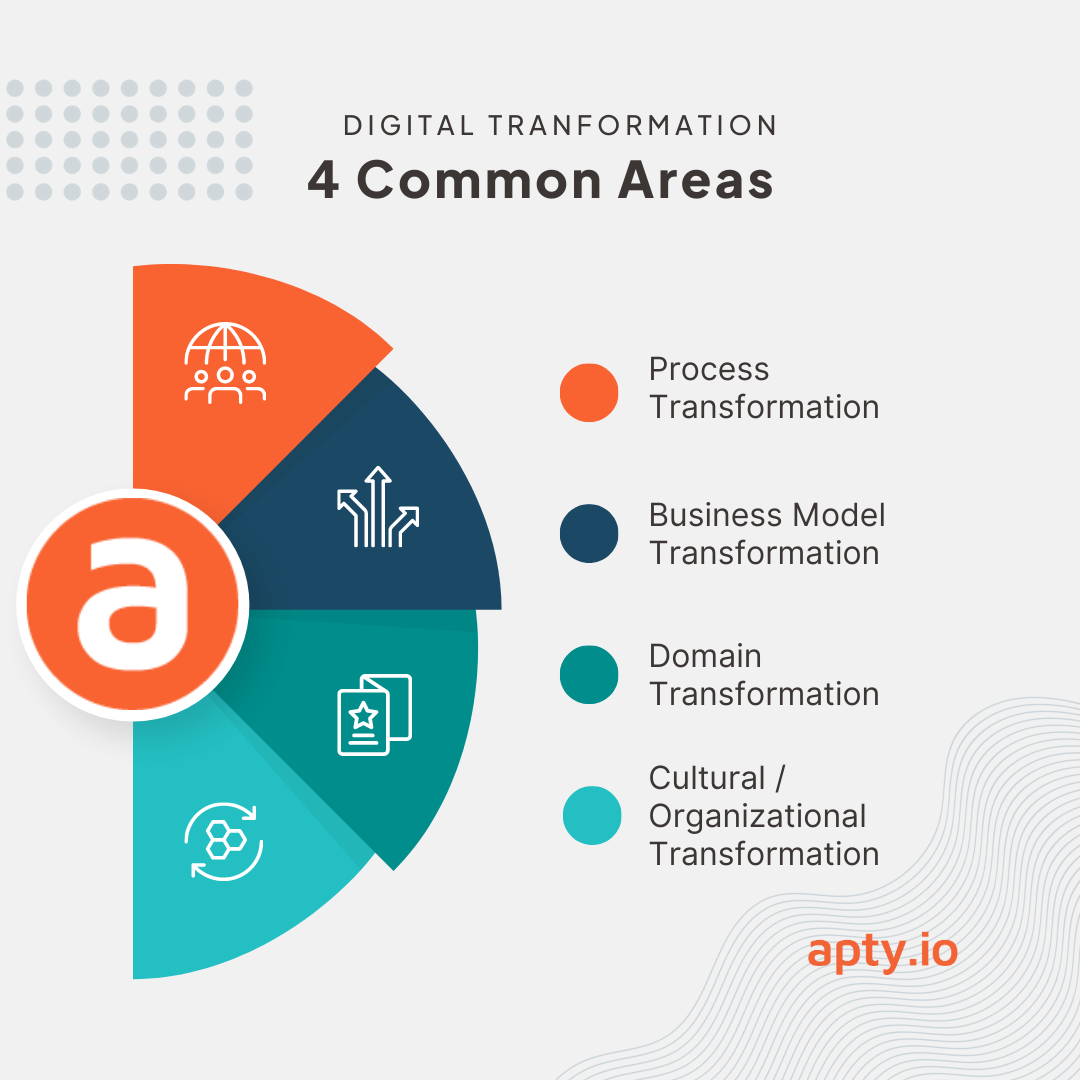
Real-World Examples of Successful Digital Transformation Initiatives
Digital transformation is all around us. From enhancing customer experiences to optimizing operational efficiencies, businesses across various sectors are leveraging technology to drive significant change. Dive into our curated list of real-world examples showcasing successful digital transformation initiatives, highlighting how innovative strategies and cutting-edge technologies are reshaping industries and setting new benchmarks for success.
These initial bulleted examples reflect a broad understanding of how various industries harness digital transformation tools to revolutionize their operations, customer relationships, and market strategies. These initiatives demonstrate the critical role of digital transformation in achieving competitive advantage, operational excellence, and customer-centric growth.
ERP (Enterprise Resource Planning)
- Walmart: Implemented a customized ERP system that integrates its entire supply chain, inventory management, and customer service processes, leading to improved efficiency and reduced operational costs.
CRM (Customer Relationship Management)
- Salesforce and Coca-Cola: Coca-Cola implemented Salesforce CRM to improve customer engagement and streamline their sales process, resulting in enhanced customer satisfaction and increased sales efficiency.
SCM (Supply Chain Management)
- Amazon: Utilized advanced SCM technology to optimize its logistics and distribution network, significantly improving delivery times and customer satisfaction while reducing costs.
ITSM (IT Service Management)
- Microsoft and HP: HP’s adoption of Microsoft’s ITSM solutions streamlined their IT processes and service delivery, enhancing service quality and operational efficiency.
HRSM (Human Resource Service Management)
- Airbnb: Leveraged HRSM solutions to enhance employee experiences and automate HR processes, resulting in improved talent management and operational efficiency.
BPM (Business Process Management)
- Toyota: Integrated BPM tools to refine its manufacturing processes, enhancing flexibility and responsiveness to market changes while maintaining high-quality standards.
PM (Project Management)
- NASA: Employed advanced PM software to manage the complex logistics and coordination of space missions, enhancing collaboration and ensuring project timelines were met.
LMS (Learning Management Systems)
- Google and Coursera: Google’s partnership with Coursera to offer professional certificates showcases the effective use of LMS for scalable, global education and skill development in digital fields.
These examples illustrate how companies have effectively implemented solutions like ERP (Enterprise Resource Planning), CRM (Customer Relationship Management), SCM (Supply Chain Management), ITSM (IT Service Management), HRSM (Human Resource Service Management), BPM (Business Process Management), PM (Project Management), and LMS (Learning Management Systems) to achieve remarkable outcomes.
But let’s dive deeper into other digital transformation use cases.
Digital Transformation Through Implementing an Enterprise Resource Planning (ERP) System:
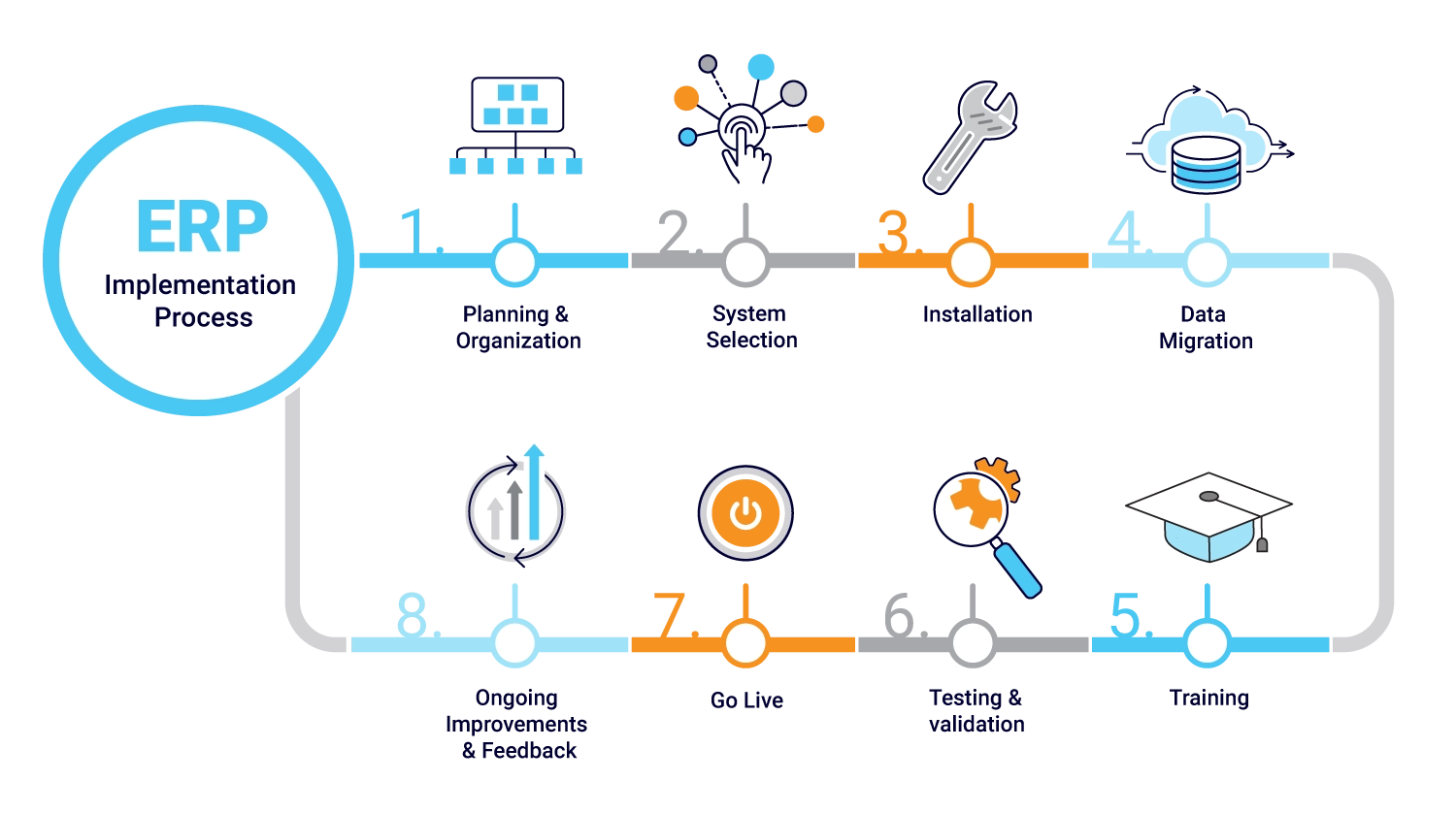
Therap Services LLC provides documentation and communication software for the disability and healthcare industries. The company experienced many challenges due to its lack of real-time performance insights. This made it difficult for them to make informed decisions and identify areas for improvement. Furthermore, their limited cross-departmental communication resulted in inefficient operations due to the creation of data silos.
Before implementing Oracle ERP, Therap Services LLC faced several significant challenges that hindered their operational efficiency and decision-making capabilities:
- Lack of Real-Time Performance Insights: The company struggled with obtaining immediate access to performance data and analytics. This lack of real-time insights made it difficult for them to make informed decisions promptly and accurately, impacting their ability to respond to market changes or internal performance issues effectively.
- Inefficient Cross-Departmental Communication: Limited communication between different departments within the company led to operational inefficiencies. This was primarily due to the creation of data silos, where each department operated independently with its set of data, making it challenging to have a unified view of the company’s operations and performance.
- Data Silos: The presence of data silos not only affected communication but also resulted in redundant work and discrepancies in data across the organization. The lack of a centralized system meant that data was not easily shareable or accessible, leading to inconsistencies and errors in reporting and analysis.
- Inability to Identify Areas for Improvement: Without a comprehensive and integrated view of business operations and performance metrics, Therap Services LLC found it challenging to identify areas that required optimization or improvement. This affected their ability to enhance operational efficiency and adapt to the evolving needs of the disability and healthcare industries they serve.
To address the above challenges, they implemented Oracle (ERP).
By implementing Oracle ERP, Therap Services LLC aimed to overcome these challenges by integrating their operations onto a single platform, enhancing real-time data access, improving cross-departmental collaboration, and enabling more informed decision-making and strategic planning.
As a result of the ERP system, a single platform was able to centralize managing finances, procurement, and supply chain operations. Many manual processes were automated, resulting in reliable and consistent data, improved decision-making, and increased productivity.
Doing so allowed Therap Services to decrease manual errors, boost collaboration and communication between departments, and foster growth for their business. The new system gave the company real-time visibility into its performance, making it easier to identify areas for improvement. Communication and collaboration across departments also improved, leading to increased operational efficiency.
Since then, Therap Services has partnered with Oracle to create HIPPA-compliant video library options for consumers: press release here.
Digital Transformation Through Implementing an IT Service Management (ITSM) System:
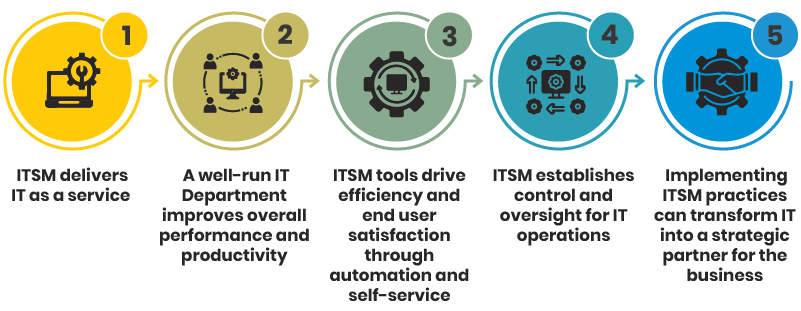
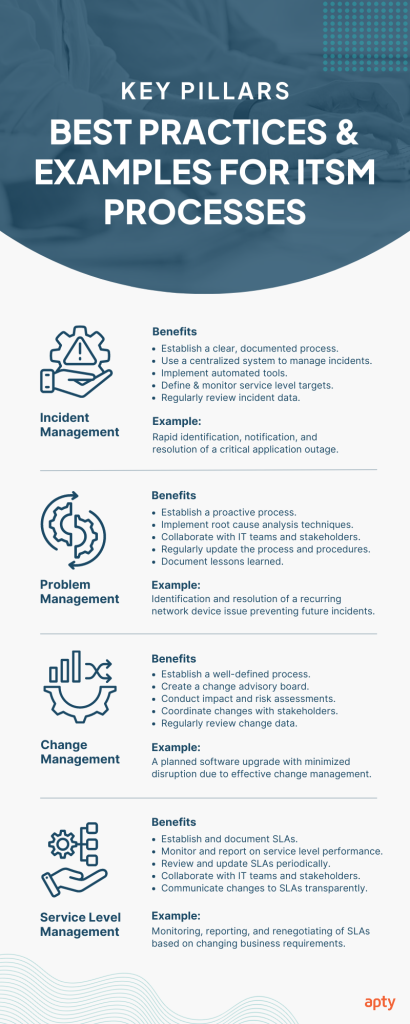
To manage its IT infrastructure and services, Deutsche Bank needed help. The consequences of disjointed systems and manual processes were slow response times, high costs, and low customer satisfaction. Deutsche Bank implemented ServiceNow’s ITSM solution to address these challenges, which offers a central platform for managing its IT services, including incident management, change management, and asset management. The ITSM solution automates manual processes, resulting in fewer errors and greater efficiency.
Implementing an ITSM solution helped Deutsche Bank improve its IT operations in many ways. Firstly, it has allowed the bank to streamline its IT operations, resulting in faster response times and improved customer satisfaction. Secondly, the ITSM solution has provided real-time visibility into the bank’s IT infrastructure, allowing for better decision-making and more informed responses to changes in the IT environment.
Integrating Deutsche Bank’s existing systems with ITSM improved the overall customer experience, which led to increased competitiveness and growth for the bank.
Another, well-documented real-world example of a successful ServiceNow ITSM implementation is that of Magellan Health, a Fortune 500 company specializing in managed healthcare and pharmacy benefits management.
ITSM Implementation at Magellan Health
Enterprise: Magellan Health
Industry: Healthcare
Challenge: Before implementing ServiceNow ITSM, Magellan Health faced challenges with their existing IT service management processes, which were manual, time-consuming, and not scalable. This inefficiency impacted their ability to deliver timely healthcare services and manage internal IT requests effectively, leading to increased operational costs and decreased employee satisfaction.
Solution: Magellan Health chose ServiceNow ITSM as their solution to modernize their IT service management.
Implementation Highlights:
- Consolidation of IT Tools: Magellan Health was able to consolidate multiple IT service management tools into ServiceNow’s single platform, simplifying IT operations and providing a unified experience for managing IT services.
- Automation of IT Processes: By automating various IT processes, including incident management, request fulfillment, and change management, ServiceNow helped reduce manual workloads and improve response times for IT issues.
- Enhanced Visibility and Control: ServiceNow provided Magellan Health with comprehensive dashboards and reporting capabilities, offering real-time insights into IT operations and service performance, which enabled better decision-making and proactive management of IT services.
Outcomes:
- Improved Efficiency and Productivity: The automation and streamlining of IT service management processes led to significant improvements in efficiency and productivity, enabling IT staff to focus on higher-value activities.
- Enhanced Employee Experience: With quicker response times and a more user-friendly interface, employee satisfaction with IT services improved, contributing to a better overall working environment.
- Cost Reduction: The consolidation of IT tools and the increased efficiency of IT processes resulted in cost savings for Magellan Health, allowing them to allocate resources more effectively and focus on their core mission of improving healthcare services.
This example of Magellan Health’s implementation of ServiceNow ITSM illustrates the transformative potential of modern IT service management solutions in addressing operational challenges, improving efficiency, and enhancing service delivery within large, complex organizations.
Digital Transformation Through Implementing a Human Capital Management (HCM) System:
Relevant Read: 5 Steps for a Successful Huan Capital Management (HCM) System Implementation
Unilever, a leading global consumer goods company, faced challenges managing its global workforce from relying on disparate HR systems, leading to inefficiencies, delays, and low employee satisfaction.
It’s no secret that managing a global workforce is a complex and time-consuming endeavor. With employees in dozens of countries, each with its local laws and customs, it’s challenging to keep track of everything. That’s why Unilever decided to implement a Workday HCM solution.
By implementing the Workday HCM solution, Unilever managed its workforce more effectively, resulting in happier and more productive employees. The solution also allowed Unilever to understand its workforce better, leading to more informed decisions about its workforce.
Human capital management (HCM) solutions, such as Workday, eliminate many manual procedures, creating fewer mistakes and accelerating effectiveness. Additionally, it allows instantaneous insights into the organization’s global labor force, aiding in making better decisions and providing more informed answers to differences in the labor surroundings.
The world is becoming increasingly interconnected, and the need for technology adoption has increased tenfold. We’re creating a new digital landscape in which businesses and consumers can seamlessly interact. Digitally mature companies are 26% more profitable than their less mature peers.
A digital transformation can be a multi-year process involving changing how you do business. It is more than just data transformation and involves changing business processes, culture, and skills. It is a learning process for the people involved. Below, you’ll learn the 7 best practices for a successful digital transformation.
7 Best Practices for Successful Digital Transformation
Let’s delve into the essential strategies that organizations must adopt to not only survive but flourish in the digital era. From fostering a culture of innovation to leveraging data analytics and embracing agile methodologies, these best practices are the cornerstone of a successful digital overhaul.
1. Understanding the Organization’s Problem
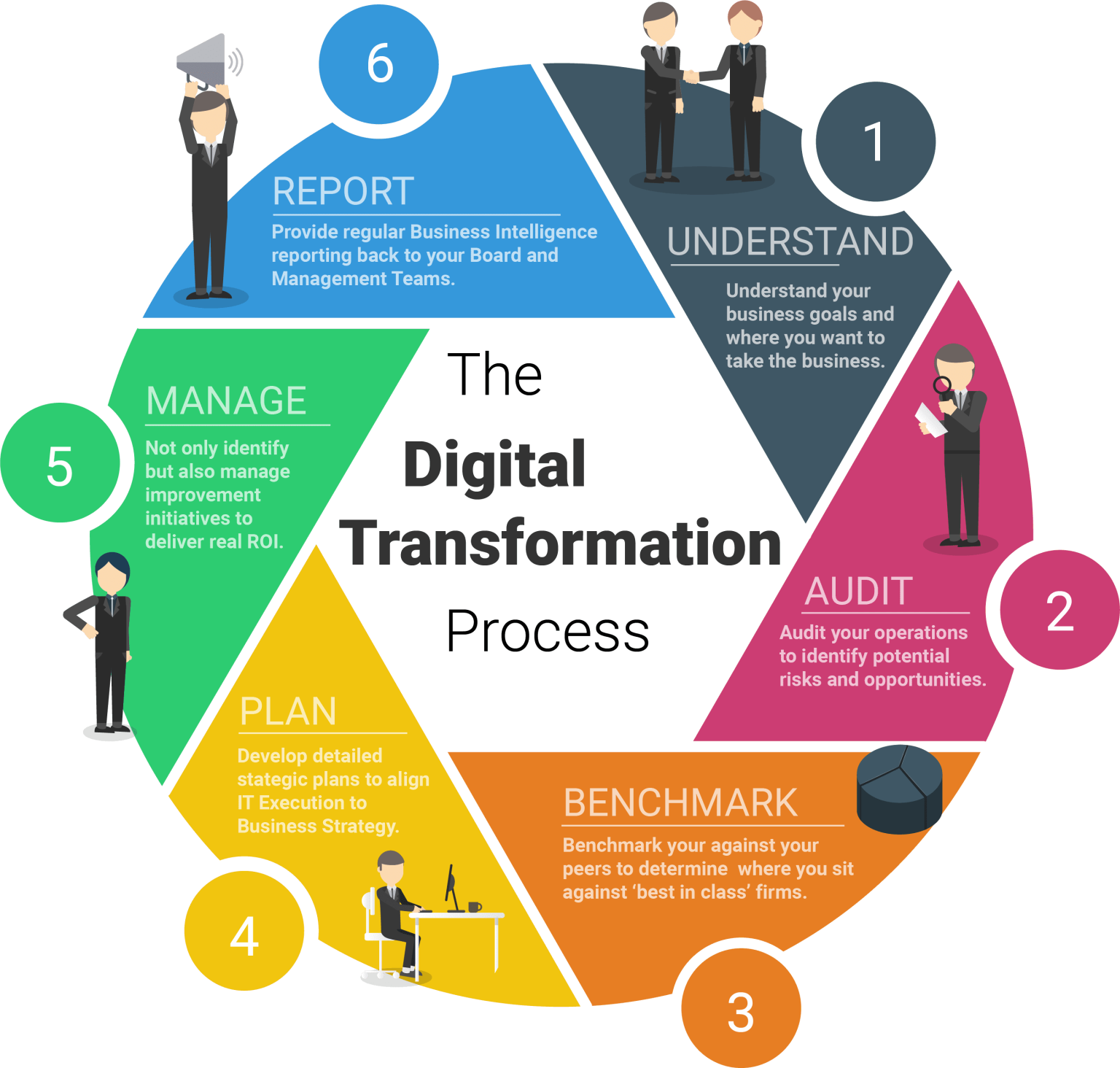
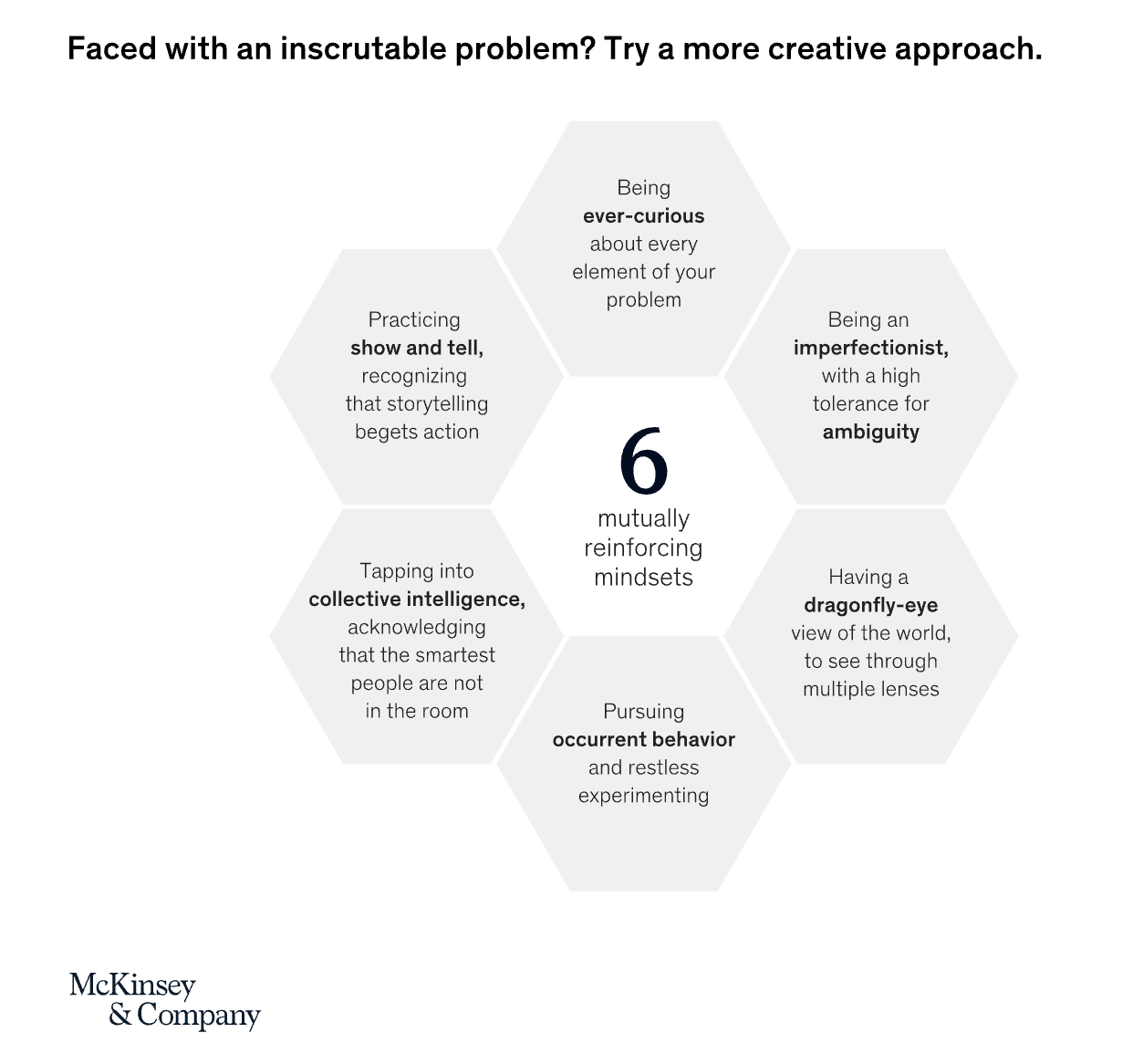
The first step for a successful digital transformation is determining your organization’s business problem. Diagnosing and solving an organizational problem can be difficult. Too often, people try to solve the symptoms instead of the cause.
One of the American national banks–a subsidiary of a large multinational group–wanted to upgrade and modernize its planning systems to comply with data integrity regulations. Maintaining up-to-date forecasts, planning, and portfolio projections is essential for banks. It requires reliable data and oversight to make fast, informed decisions.
To ensure quality oversight, smooth enterprise decision-making, and real-time updates, they looked to the digital adoption platform, Apty, for assistance in driving their digital adoption process. With help from an enterprise DAP, the bank achieved its goal of training personnel and maintaining high data standards across its organization.
Having a vision for digital transformation can help people understand what is possible and how they need to change to achieve it. A common mistake is to focus on technology but ignores other areas, such as culture or business processes. A holistic approach to solving an organization’s problem reduces bottlenecks, resistance, and further potential issues during the digital adoption phase of digital transformation.
2. Hiring Experienced Talent
In a digital transformation, it is important to hire experienced talent. This is because there are many unknowns in the digital world, and the best way to solve them is by using their experience.
A veteran employee has a vast history of experience which can help any organization detect issues during your transformation process beforehand. These employees have the capability to eliminate digital barriers. Creating a feedback loop for them to be a part of is key to keeping communication and checkpoints open for them to share their insight. They can also help train other employees, who can guide others and quell initial fears about the unknown. Ensure success by giving these veterans a way to contribute and hold a strong role in the company’s growth. Experienced employees are more self-aware, multi-skilled, and adaptable, deliver more for less, and bring stability and expertise to your organization.
Suppose you don’t have experienced employees specialized in the transformation goal you want to achieve (software, personnel, learning & development, technology). In that case, it’s ok to get help outside your organization: consultants, vendors, partners, or former colleagues are all great resources. This 3rd-party assistance can help you implement a learning management system, especially for complicated software deployed across an entire enterprise.
Utilizing Digital Skillsets for Digital Transformation
Satya Nadella, the CEO of Microsoft, is a great example of how to successfully introduce new technology into a workplace whilst making use of experienced and talented employees. Under Nadella’s guidance, Microsoft has undergone an impressive digital transformation; cloud computing and AI are at the heart of this. He has enabled his staff to lead the charge with this transformation – allowing them to bring their expertise to build new technologies for the market. For example, their Azure cloud platform, which rivals Amazon Web Services and Google Cloud, has become a key contributor to the business’s success. This is down to the veteran Microsoft personnel who knew their way around the company’s technology and could propel its presence in the cloud computing sector. Ultimately, Nadella’s strategy has seen Microsoft stay at the cutting edge of tech and remain competitive in an ever-evolving digital landscape.
Read more on how to successfully implement platforms like Workday, ServiceNow, Salesforce, MS Dynamics, and Oracle throughout your organization.
3. Developing Skills for Transformation
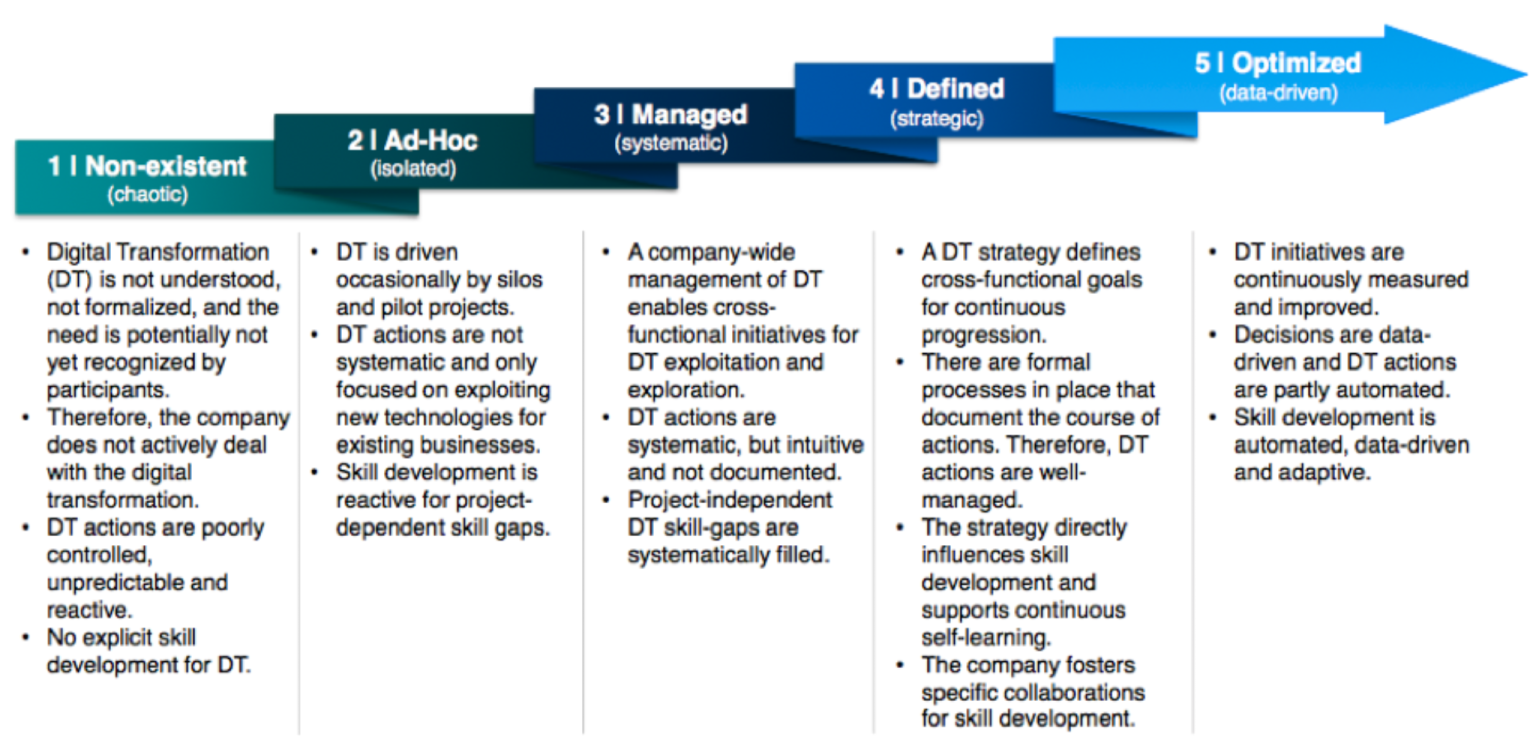
Every industry is disrupted by digital transformation, and companies need to adapt or risk being left behind. Enterprises are embracing digital technologies and transforming their businesses to survive and thrive in this new environment.
The Digital Skill Gap
But this is not an easy task. It requires a different set of skills. Companies need innovative, creative, and agile employees who keep learning and focusing on developing their skills to succeed in the digital age. Sometimes grit and eagerness to learn are better qualities in an employee than already possessing the needed skills the position requires. It’s about their growth potential and, therefore, the company’s growth.
The digital transformation of the workplace demands a set of skills to ensure its successful implementation. Employees should have technical proficiency, which simply refers to utilizing technology to support business objectives.
Digital literacy extends this notion and involves proficiency with various digital tools, platforms, and mobile devices, including emerging capabilities like AI image generation. Analytical thinking is also needed to use data effectively; employees must be able to turn insights into decisions.
As part of a successful digital transformation strategy, organizations must equip employees with intelligent tools that enhance productivity and creativity. AI-powered solutions, such as an ai image editor, enable teams to quickly create, refine, and optimize visual content without requiring advanced technical skills. By integrating such tools into everyday workflows, companies can streamline creative processes, reduce manual effort, and improve overall efficiency while maintaining high-quality digital output.
Collaboration is necessary given the cross-functional teaming aspects that accompany such transformations, while adaptability is imperative in high-velocity environments where technology can rapidly evolve. Finally, creativity helps new ideas flourish as solutions to existing challenges come forth.
Employee Growth Through Digital Transformation
If your employees are eager to learn, then help them grow. Invest in training, learning, development, and employee efficiencies that can increase productivity, employee engagement, and positive experiences with the newly introduced technology. If their skills are nurtured to grow with the new digital transformation initiative, then they are more likely to have increased buy-in, motivation, and interest in adopting the change.
Effective talent management is at the heart of any successful digital transformation—ensuring that your employees have the right skill set for the new environment that digital transformation brings. In fact, organizations with highly skilled employees are twice as likely to succeed in a digital economy than those who don’t invest in their people’s development.
Tip 1: Utilize a mentoring program. Read more about it in this Forbes article.
Tip 2: Implement an appropriate change management strategy.
4. Handling New Opportunities and Risk
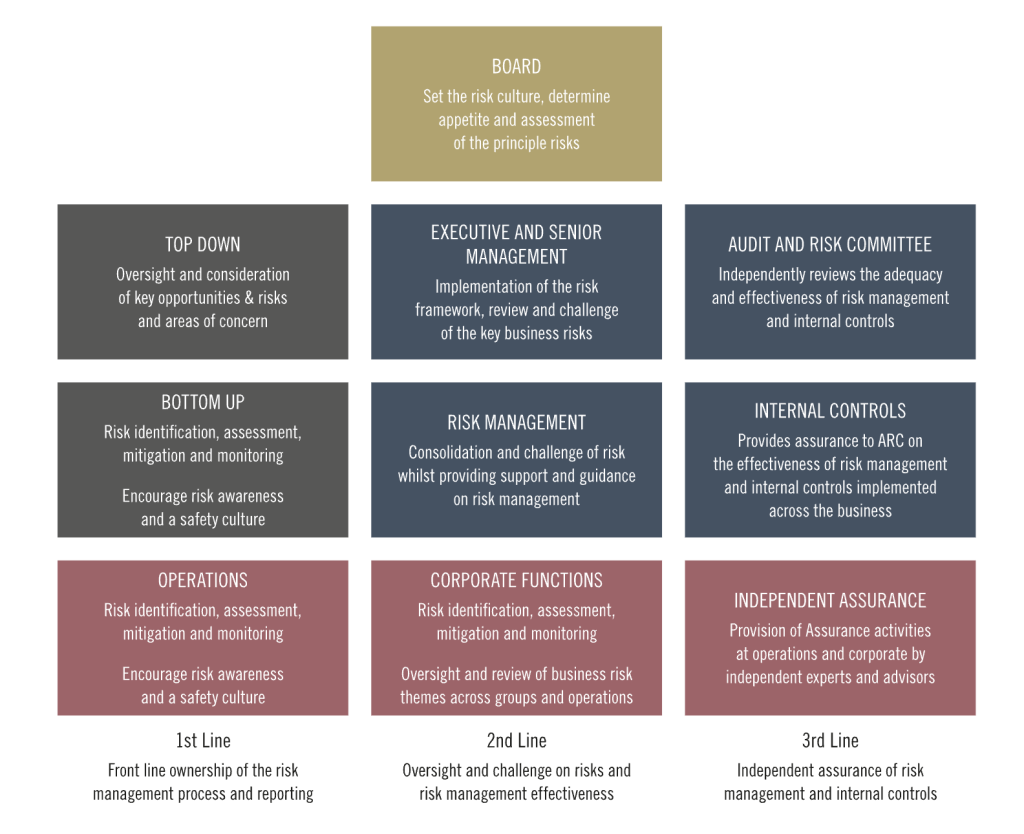
The first step to digital transformation is to understand the risks involved. When a new challenge arises, companies and employees must evaluate the opportunities and risks to make an informed decision.
New technologies are mitigating and evaluating these opportunities and risks for you. For example, digital immunity systems reduce tech downtime by pooling cumulative data from analytics, operations, design, and development to identify, process, and resolve problems. Digital orchestration also allows data to be compiled, analyzed, and used to take action to reduce, mitigate, or prevent risks altogether. Predictive digital adoption platforms are also a wave of the future that can help with human errors during software onboarding, training, and change management processes.
But these new platforms do not negate the manual evaluation process needed when confronting a new digital transformation initiative. For example, when implementing an ERP like Workday or Oracle across an entire enterprise as a part of a business transformation initiative, you must weigh the opportunities and risks of this software rollout. Risks could include a failed digital transformation process due to unsuccessful software adoption. By weighing and addressing potential reasons for failed software adoption beforehand, you could mitigate these risks making them null and void. Failed software adoption could result from employee resistance, negative culture, lack of communication, or insufficient training in how to use the new software.
The opportunities of any implementation should outweigh the risks
A successful Workday implementation could result in:
- Connected communications
- Better leadership oversight
- Real-time analytics for informed decisions
- Better employee experiences
- Increased employee productivity.
It’s also important not to get too fixated on “a deadline,” as this can cause companies to lose sight of their goals and forget why they’re working towards them in the first place. Mishandling new opportunities and risks can lead to financial loss, missed opportunities, and even employee turnover, so taking the time to assess the situation and make plans is crucial.
5. Investing in the Right Technology
Learn more from CFO Journal article in WSJ–content by Deloitte–on Rethinking Technology Investments and How to Maximize the Impact of Technology.
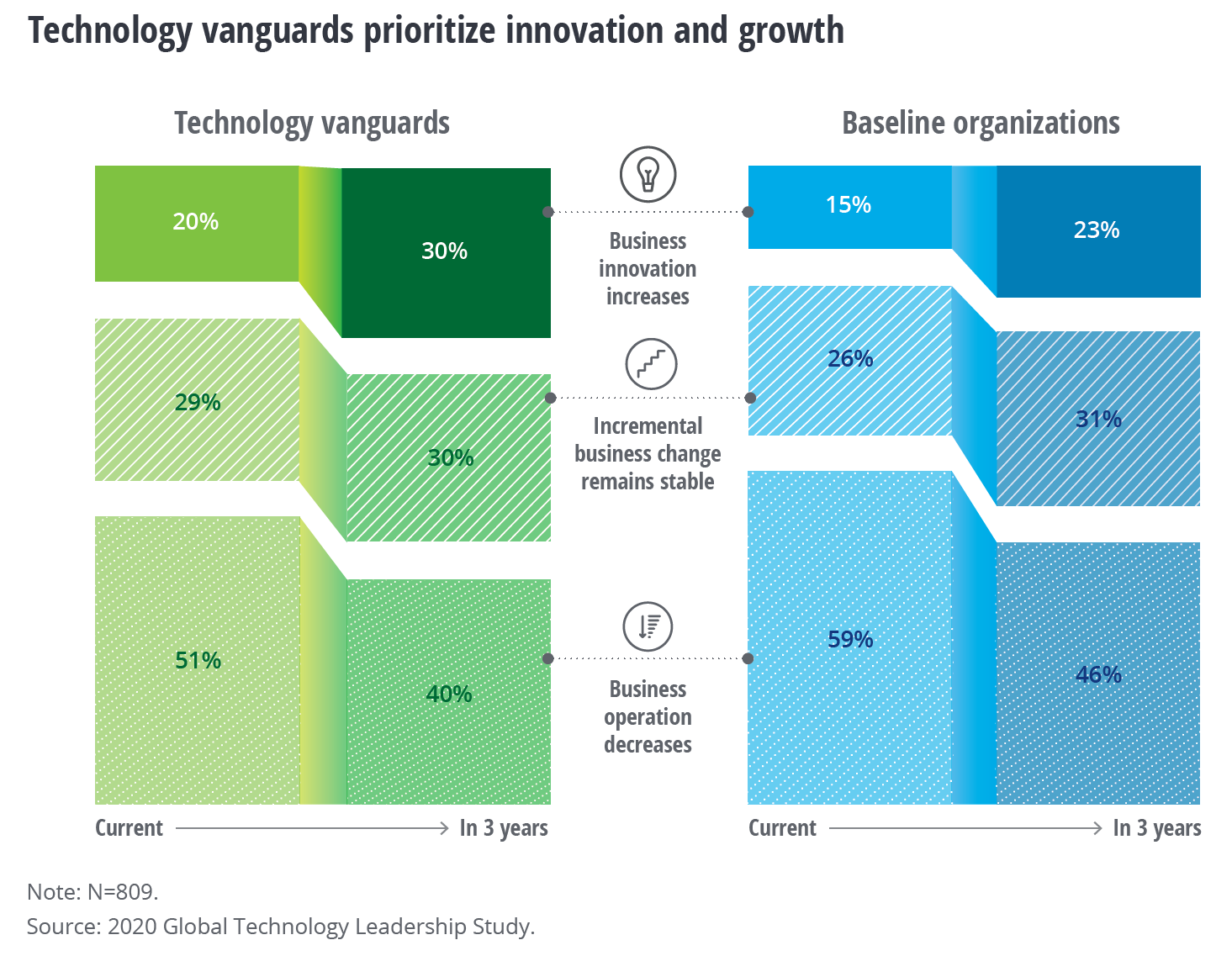
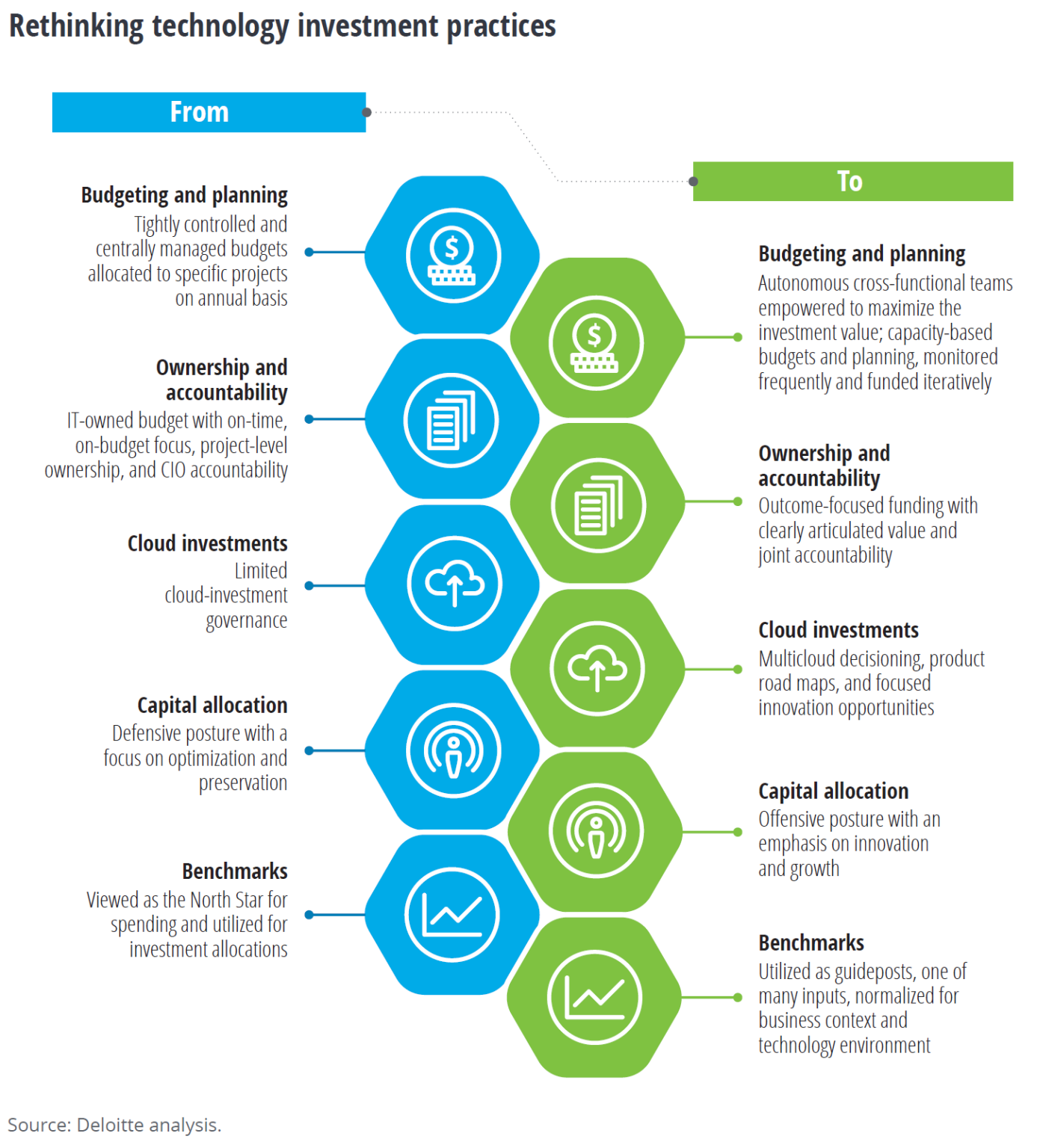
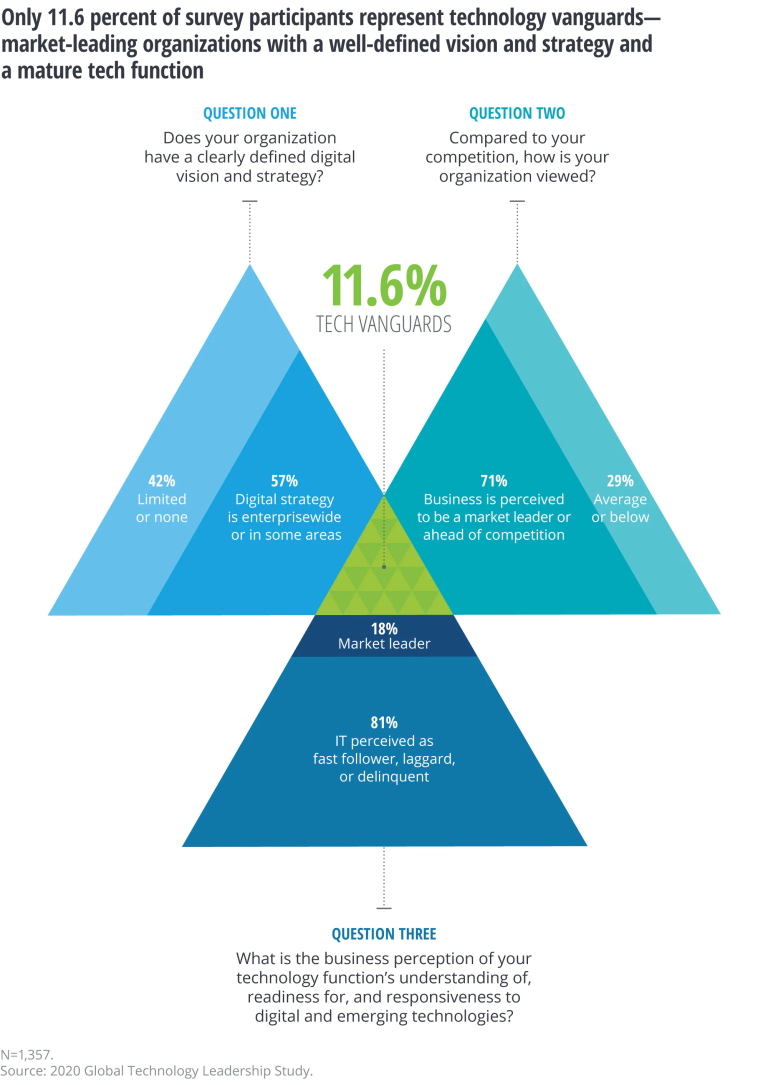
In a Thomson Reuters survey, 70 percent of surveyed organizations said a top priority for them to cut costs is “using tech to simplify workflows and manual processes.” Investing in the right technology is crucial to achieving successful digital transformation. Technology investments can make or break a company’s ability to compete effectively in today’s fast-changing environment.
This means
- Choosing the right technology to meet your current and future needs
- Ensuring compatibility with other systems before implementation. With API integrations come security risks.
- Calculating software return on investment (ROI).
Digital transformation is not just a technology but also a change in business strategy. In today’s digital world, companies need to be able to adapt quickly and effectively to changes in their industry. A successful digital transformation depends on how well you invest in technology.
6. Nurturing Culture for Change
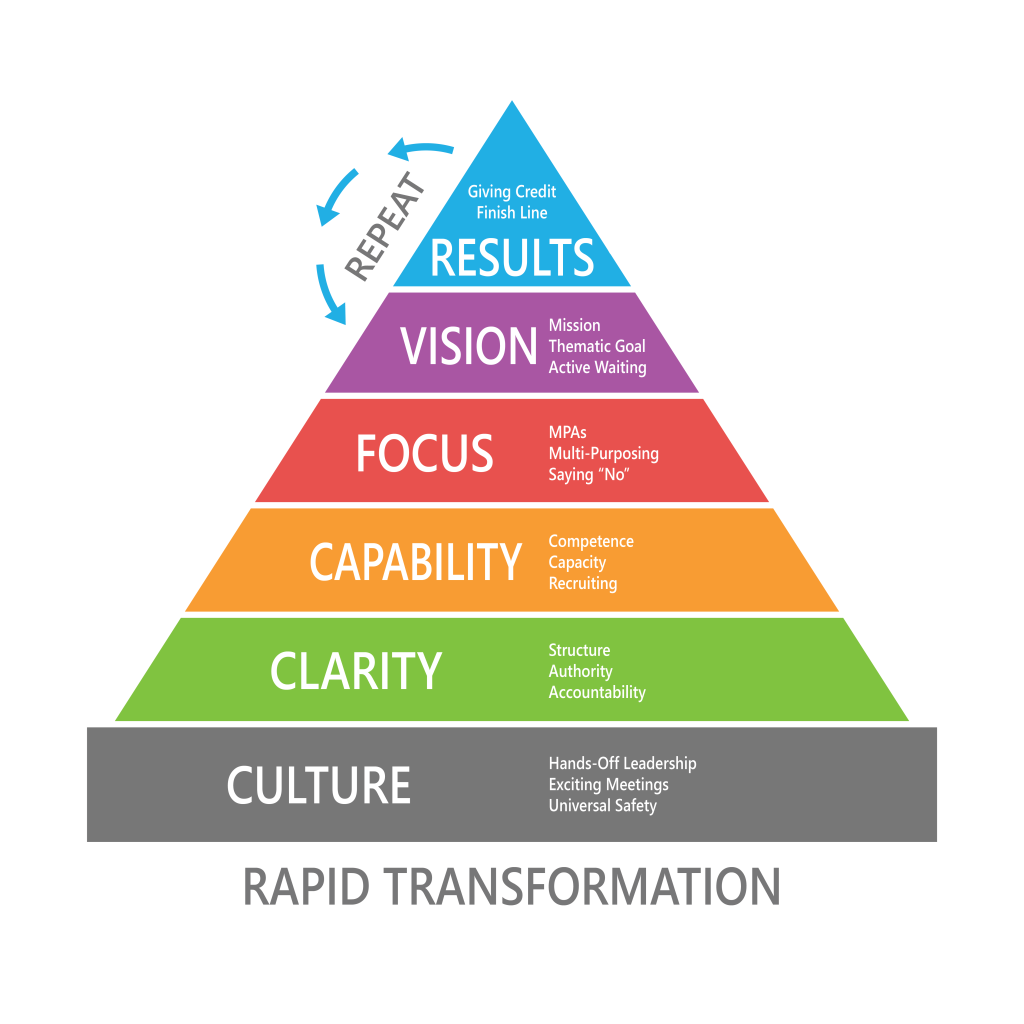
Digital transformation depends highly on an organization’s culture: the workforce’s ability to understand and adapt to your digital transformation and any collateral changes.
Evaluating the current culture that your organization follows and redefining it to be open to change helps achieve digital transformation goals.
- Identify new opportunities to engage leadership and employee.
- Invest time and energy into understanding your employees’ needs.
- Understand the weaknesses in your company culture.
- Do you have appropriate communication channels for feedback?
- Do you have a culture that allows for open and honest communications?
- Do your employees feel they make a difference and will be incorporated into or a large part of the change?
- This is crucial for developing buy-in and motivation to invest and achieve the company’s goals.
- Are your employees’ goals and pain points addressed in this change?
- If so, make it known to them. If not, make sure you address these concerns.
Open Security Culture ensures security awareness and knowledge sharing by making security practices and information accessible. It involves revealing policies, guidelines, best practices, and tools that foster collaboration and idea exchanges. Everyone benefits from Open Security Culture – individuals, organizations, and society as security posture results can improve through collective expertise and collaboration.
The challenge with culture change is that it’s not something that happens overnight. Changing company culture requires rethinking and even reorganizing initiatives, goals, and processes to achieve greater agility and responsiveness. With a company culture that is open, agile, flexible, and inspired by change, you can transform business processes, increase digital transformation, improve employee productivity, and in turn, grow your revenue.
Change Management Relevant Reads:
7. Communication is Key
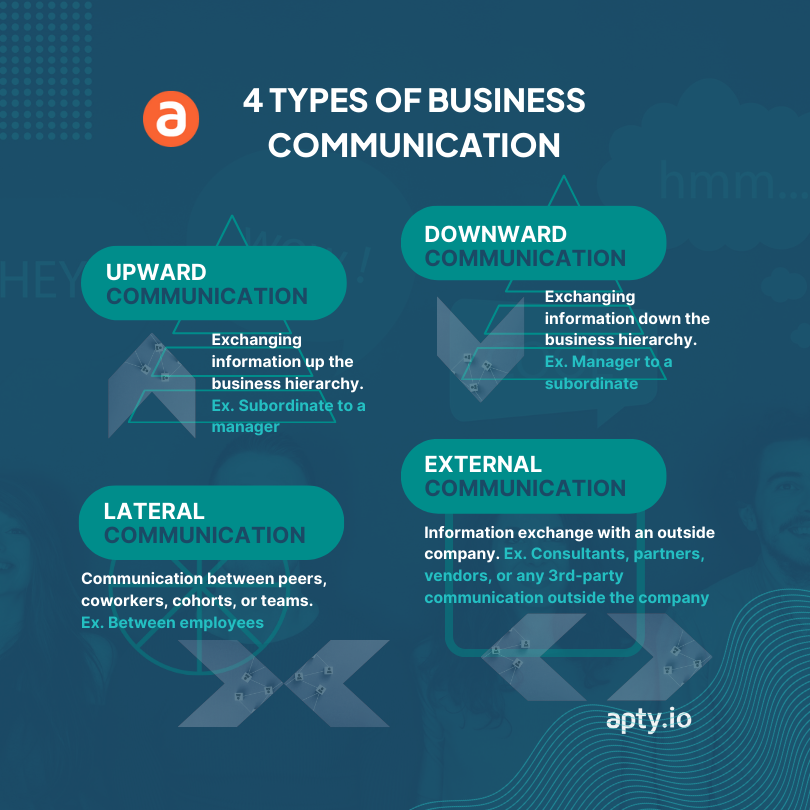
An organization’s digital transformation is only as good as its communication. The ability to communicate the vision and purpose of the transformation is key to success. Everyone in the organization should know where to focus and how to work together toward a common goal. As leaders, we must set these parameters and communicate them clearly and concisely to inspire and motivate.
Clear and open communication helps build trust and relationships within an organization, which are essential to successful digital transformation. Talking about the digital transformation strategy and conducting employee training sessions helps them prepare for any such changes.
Positive and Negative Examples of Enterprise Communication Tactics for Digital Transformation
One example of positive communication is Steve Jobs, renowned for his passionate and captivating talks, in which he conveyed Apple’s vision and values to the world. His distinct style of using uncomplicated language and personal stories left a lasting mark. Jobs also utilized technology, such as slideshows and live demonstrations, to emphasize his points and make them simpler to comprehend. With each of his talks, Jobs effectively articulated Apple’s brand image and laid out an encouraging base for the organization’s future success.
An example of a failed communication is of Twitter, Tesla and SpaceX CEO, Elon Musk, who has been no stranger to controversy due to his tweets and public statements. In 2018, a tweet sparked speculation about taking Tesla private without consulting the board or legal advisors; this caused significant financial and legal repercussions. Corporate leaders need to ensure their communication practices are discussed and reviewed with relevant personnel before disseminating information to prevent uncoordinated communications from causing expensive consequences.
Additional Resource: Diving Deep into Communication Skills — Elon Musk vs Steve Jobs
Today’s business leaders are looking for ways to make their organizations agile and more responsive to emerging opportunities and disruptions. The rapid pace of technological change is making it imperative that they develop a strong, clear understanding of where they are today and where they want to be in the future. Read more about some digital transformation examples that can help you understand how digitally mature enterprises have prioritized and successfully achieved digital transformation.
As technology continues to advance at a record pace, organizations are finding it difficult to keep up. Organizations must find ways to improve their services through digital transformation to stay competitive.
Digital transformation relies on a successful change management & digital adoption strategy.
organizations face the monumental task of not just adapting to new technologies but fully integrating them into their core operations to stay ahead. Digital transformation best practices serve as a beacon for companies navigating this complex terrain, guiding them towards successful adaptation and growth. At the heart of this transformative journey lies the strategic utilization of Digital Adoption Platforms (DAPs), which have emerged as crucial tools in accelerating change management, ensuring comprehensive digital adoption, and fostering an environment ripe for digital transformation. These platforms are not merely tools but catalysts that propel companies towards achieving their digital goals, driving significant value across all facets of the organization.
Harnessing Digital Adoption Platforms: A Modern Strategy for Transforming Your Business
DAPs streamline the process of integrating new technologies by making them more accessible and understandable to all employees, regardless of their technical expertise. This accessibility accelerates the pace of change management, enabling organizations to quickly adapt to and embrace new technologies. Furthermore, by ensuring true software adoption, DAPs help maximize the return on investment in digital tools, ensuring that these technologies are used to their full potential and are driving productivity and efficiency improvements.
In essence, a Digital Adoption Platform is not just an enabler but the backbone of a modern strategy for digital transformation success, ensuring that businesses can evolve with the digital age rather than being left behind.
How Digital Adoption Platforms Accelerate Digital Transformation Best Practices
Digital Adoption Platforms (DAPs) and the true software adoption by employees play a pivotal role in realizing the potential of digital transformation within an organization. By integrating these tools and strategies, businesses can effectively address the core components of digital transformation best practices:
Understanding the Organization’s Problem
- DAPs offer analytics and insights into how employees interact with software, identifying bottlenecks and areas for improvement, thus providing a clear understanding of organizational challenges.
- True software adoption ensures that the digital solutions in place effectively address specific organizational problems, demonstrating how technology solves real-world issues.
Hiring Experienced Talent
- A robust DAP can reduce the need for highly specialized technical skills by making technology more accessible and intuitive, allowing for a broader talent pool.
- Encouraging software adoption among existing employees cultivates a digitally savvy workforce, making it easier to attract experienced talent who seek innovative workplaces.
Developing Skills for Transformation
- DAPs facilitate on-the-job learning and support continuous education, enabling employees to develop the necessary skills for digital transformation seamlessly.
- True software adoption empowers employees to master new technologies, fostering a culture of continuous improvement and adaptability.
Handling New Opportunities and Risk
- By improving software literacy and confidence among employees, DAPs enable organizations to swiftly capitalize on new opportunities with lower risk.
- Comprehensive software adoption minimizes the risks associated with deploying new technologies, as employees are better prepared to use these tools effectively and securely.
Investing in the Right Technology
- DAPs themselves are a testament to investing in technology that directly enhances user adoption and maximizes ROI from other digital investments.
- True software adoption ensures that investments in technology are fully leveraged, demonstrating the value of selecting tools that meet the organization’s needs.
Nurturing Culture for Change
- DAPs support a culture of innovation and adaptability by encouraging exploration and proficiency in new software, making change more acceptable.
- Successful software adoption reinforces a positive attitude toward change, as employees experience firsthand the benefits of digital transformation.
Communication is Key
- DAPs enhance communication by providing platforms for real-time feedback and support, bridging the gap between IT departments and end-users.
- Encouraging true software adoption fosters a communicative environment where employees feel supported in their digital journeys, promoting transparency and collaboration across the organization.
By focusing on these aspects, Digital Adoption Platforms and the genuine adoption of software by employees not only support but amplify the impact of digital transformation best practices within any organization.
The Digital Transformation Solution to Mitigate Resistance and Drive Success
As organizations chart their courses through the digital transformation landscape, the adoption of Digital Adoption Platforms stands out as a key strategy for success. By addressing critical best practices—ranging from understanding organizational challenges to nurturing a culture of change—DAPs play an indispensable role in facilitating a seamless transition into the digital era. They not only accelerate change management and software adoption processes but also enhance the overall value delivered by digital transformation initiatives. In the journey towards becoming a digitally mature company, leveraging the power of Digital Adoption Platforms is not just a strategic move—it’s a necessary evolution to thrive in the digital age.
Navigating the CRM Implementation Journey: Strategies for Sales Success
For businesses aiming to elevate their sales and customer management processes, implementing a Customer Relationship Management (CRM) system is not just an option; it’s a strategic necessity. Yet, embarking on the Customer Relationship Management (CRM) implementation journey can seem daunting. With careful planning, a clear understanding of the challenges, and strategic use of Digital Adoption Platforms (DAPs), organizations can turn this complex process into a catalyst for unprecedented sales growth.
The Strategic Imperative of CRM Implementation
CRM systems have become the backbone of effective sales strategies, offering many benefits that can transform how companies interact with their customers. Implementing a CRM system aligns your sales strategies with business objectives, facilitating improved customer interactions, enhanced data analysis, and increased sales efficiency.
Read More: CRM Implementation Process: 7 Steps for a Successful Implementation
Benefits of CRM Implementation: A Glimpse into Sales Success
The advantages of a well-executed CRM implementation are manifold. According to Salesforce, CRM applications can help increase sales by up to 29%, sales productivity by up to 34%, and sales forecast accuracy by 42%. These figures highlight the direct impact of CRM on enhancing sales outcomes and why its implementation is a pivotal step for businesses looking to scale their operations.
The CRM Implementation Process: A Roadmap to Success
Embarking on the CRM implementation journey requires a structured approach. From initial assessment to selecting the right system and through to execution, every step should be meticulously planned.
- Initial Assessment and Planning: The first step is understanding your organization’s needs. Identify your sales team’s key challenges and how a CRM can address them.
- Choosing the Right CRM: Options like Salesforce CRM, Dynamics CRM, and others offer varied features. The choice depends on your business size, needs, and the specific functionalities you require to achieve your sales objectives.
- Implementation Roadmap: A clear plan that outlines each phase of the implementation process is essential. This roadmap should include timelines, milestones, and the resources required at each step.
Navigating Challenges in CRM Implementation
Despite the benefits, CRM implementations can encounter hurdles. A report by Merkle found that up to 63% of CRM projects fail. Understanding and planning these challenges can significantly increase your chances of success.
Common pitfalls include lack of user adoption, data migration issues, and underestimating the importance of ongoing training and support. To mitigate these risks, involve your sales team early, ensure clear communication of the benefits, and choose a CRM that aligns with your user’s needs and business processes.
Read More: Simplifying the Complexities of CRM Training: A DAP’s Role in Sales Operations
Digital Adoption Platforms: Bridging the CRM Success Gap
Digital Adoption Platforms (DAPs) like Apty are crucial in overcoming common challenges faced during CRM implementation. They ensure that the transition to new CRM systems is smooth and that users can leverage the full potential of these platforms from the get-go. Here’s a closer look at the specific challenges organizations face during CRM implementation, the metrics to keep an eye on, the impact of these challenges, and how Apty offers solutions to each:
| Challenges | KPI Metrics | How does it impact | How Apty helps |
| High Learning Curve | Time to Proficiency, Number of Support Tickets, Completion Rates of Training Modules, User Assessment Scores, Time Spent on Initial Training | Decreased Productivity, Increased Costs, Loss of Competitive Edge, Strained Employee Morale, Ineffective Decision-Making | Interactive Walkthroughs and Tutorials, Contextual Guidance and Tooltips, In-App Learning Resources, User Proficiency Tracking, Feedback Loops and Surveys |
| Resistance to Change | User Adoption Rates, Feedback and Survey Scores on Change Perception, Time Taken to Embrace New Features, Employee Satisfaction Scores, Rate of Participation in Change Initiatives | Stagnation of Innovation, Suboptimal System Utilization, Diminished Employee Collaboration, Increased Training Costs, Customer Dissatisfaction | Interactive Walkthroughs and Tutorials to ease adaptation to new features, Contextual Guidance to support understanding and acceptance, Surveys to understand and address user resistance |
| Inconsistent Training Materials | Content Completion Rates, User Feedback on Training Material Relevance, Revision and Update Frequency of Training Materials, Alignment of Training Content with Actual CRM Use Cases, Accessibility and Availability of Training Resources | Knowledge Discrepancies, Increased Support Burden, Lower User Proficiency, Impaired Decision-Making, Increased Training Costs | In-app learning Resources to provide consistent and relevant training materials, User Proficiency Tracking to ensure materials are effective |
| Ineffective Knowledge Retention | Post-training proficiency Levels, Frequency of Refresher Training Participation, User Performance Improvement Over Time, Retention Rates of Critical CRM Concepts, and Performance Metrics Before and After Training Interventions | Reduced Operational Efficiency, Compromised Data Accuracy, Increased Training Costs, Missed Revenue Opportunities, Diminished Customer Satisfaction | Interactive Walkthroughs and Tutorials for effective learning retention, Contextual Guidance and Tooltips to reinforce learning, User Proficiency Tracking to monitor knowledge retention |
Integrating DAPs like Apty into the CRM implementation strategy addresses the immediate challenges of adoption and training and ensures CRM systems’ long-term success and optimization. Apty enhances user confidence and competence by providing real-time support and guidance, leading to improved productivity, lower training costs, and a more competitive and agile organization.
Learn More: Minimizing CRM Implementation Costs with Strategic Digital Adoption
Leveraging CRM for Strategic Sales Planning
A CRM system is not just about managing current customer relationships; it’s also a powerful tool for strategic sales planning and forecasting. By analyzing customer data and sales trends, CRMs help businesses identify potential sales opportunities and areas for growth. Especially, if your sales team is small, an appropriate CRM becomes critical, since the right platform can turn limited resources and customer insights into a clear, actionable sales strategy.
Modern sales teams increasingly complement CRM platforms with AI sales prospecting tools , which analyze buyer signals, automate lead research, and surface the most promising prospects. This combination allows businesses to move beyond reactive sales planning and adopt a more proactive, data-driven approach to pipeline growth.
Learn More: The Role of Digital Adoption Platforms in CRM Data Integrity & Compliance
CRM and Customer Retention: Strengthening Bonds
Customer retention is another critical aspect where CRM systems shine. By tracking customer interactions and feedback, businesses can create personalized experiences that foster loyalty and encourage repeat business. This not only enhances customer satisfaction but also contributes significantly to sales success. To streamline engagement and data collection, companies can convert form into QR code, allowing customers to easily access feedback or registration forms with a simple QR scan – making the entire process faster, smarter, and more interactive.
Using a qr code creator makes it easy for businesses to create scannable links to their forms without extra cost, ensuring more users complete feedback or registration in just seconds.
Delve More: 5 CRM Implementation Failures and How to Avoid Them
Embracing the Future with Customer Relation Management
As we look to the future, the role of AI CRM in sales success is only set to grow. With advances in artificial intelligence (AI) and machine learning, CRM systems will offer even more sophisticated analytics and predictive capabilities, further enhancing sales strategies and customer engagement.
CRM implementation is a journey that requires careful planning, understanding of potential challenges, and strategic use of technologies like Digital Adoption Platforms. By following a structured implementation process and leveraging the full capabilities of CRM systems, businesses can achieve improved sales results and a deeper, more meaningful connection with their customers.
Remember, a successful CRM implementation is more than a technological upgrade; it’s a strategic investment in your business’s future. As organizations modernize their CRM strategies, many are also adopting an AI conversion layer to sit alongside their CRM and DAP stack. This layer utilizes AI to capture, qualify, and convert inbound intent in real-time, ensuring high-quality data flows directly into the CRM and empowering sales teams to act more quickly on the right opportunities.